Recovery Training: How to Balance Hard and Easy Days
Learn how recovery training works, how to balance hard workouts with easy days, and how to plan rest, active recovery, sleep, and training intensity for steady fitness progress.
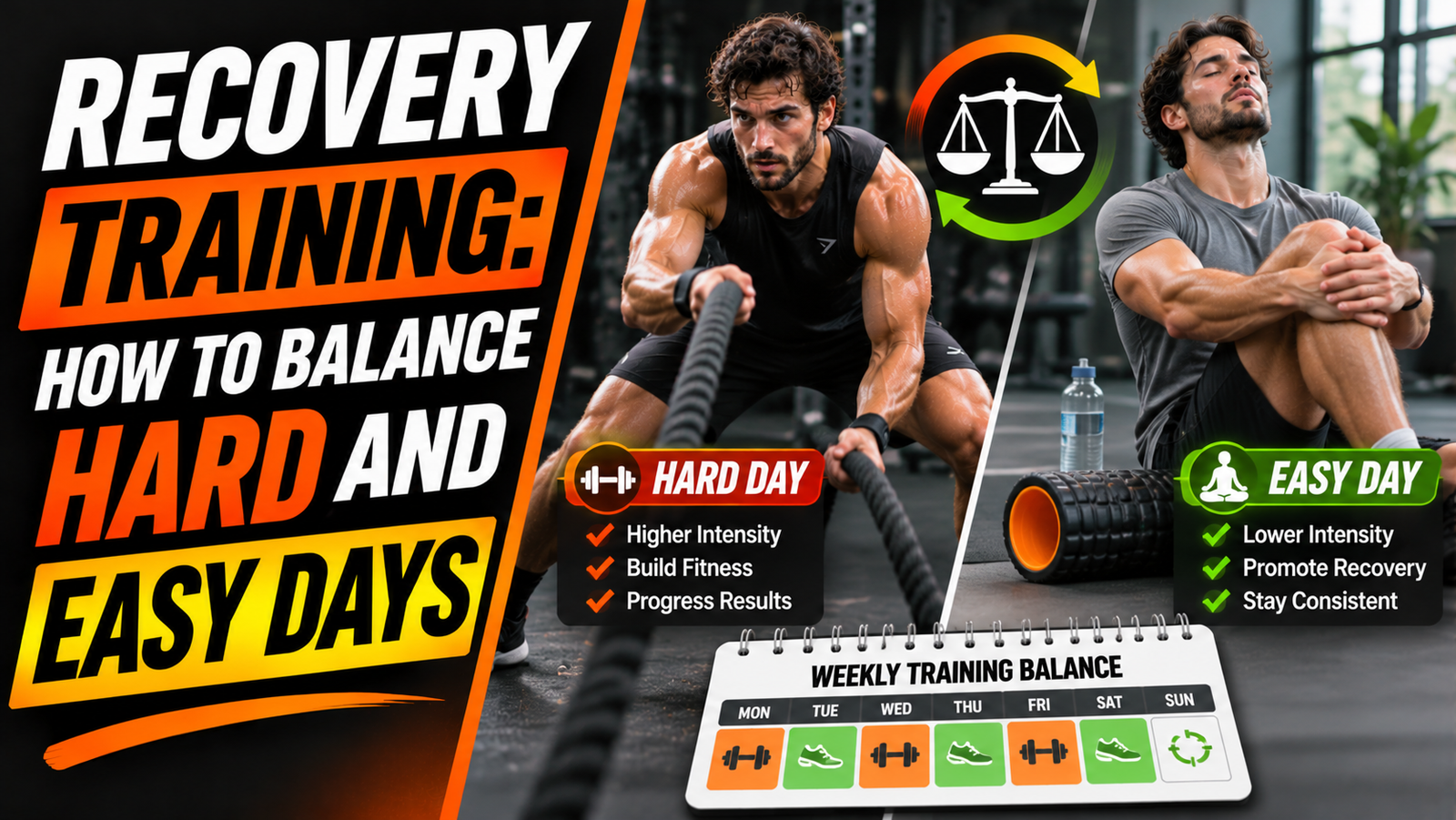
Recovery Training: How to Balance Hard Workouts and Easy Days
Working hard in the gym or pushing yourself during a run can feel productive. You finish a challenging session, feel tired, and know you have put in the effort. But what happens when every workout becomes difficult and every day turns into another test of your limits?
Progress can become harder to maintain.
Whether you lift weights, run, cycle, walk for fitness, or follow home workouts, your training plan needs more than challenging sessions. It also needs easier days, sufficient sleep, appropriate nutrition, and time to recover.
This is where recovery training becomes important.
Recovery training is the process of balancing exercise stress with enough rest and lower-intensity activity to support adaptation. It does not mean avoiding effort or taking a complete day off whenever you feel tired. Instead, it means choosing the right level of activity for each day so you can train consistently without allowing fatigue to build unnecessarily.
In this guide, you will learn what recovery training means, why easy days matter, how to recognise different levels of workout intensity, and how to build a practical weekly routine.
All Tools
- All Tools
- BMI calculator
- Wall Sit
- All workouts
- Ideal weight calculator
- Calorie burn calculator
- One rep max calculator
What Is Recovery Training?
Recovery training refers to the way you organise hard workouts, easier sessions, and rest so your body has time to respond to exercise.
Every workout creates some degree of physical stress. A challenging strength session places demands on your muscles and nervous system. A fast running workout challenges your cardiovascular system and legs. Even a long walk can leave you feeling tired if you are new to exercise or have been active for several hours.
Your body responds to these demands over time. With appropriate training and recovery, you can gradually improve strength, endurance, coordination, and exercise tolerance.
However, exercise alone does not guarantee progress.
If your workouts are consistently too demanding and your recovery is inadequate, you may experience persistent fatigue, declining performance, poor motivation, or recurring soreness.
Recovery training helps you avoid the assumption that every session must be harder than the previous one.
Recovery Training Is Not the Same as Doing Nothing
One common misunderstanding is that recovery means complete inactivity.
Sometimes, complete rest is exactly what you need. On other days, light movement may feel comfortable and help you maintain your routine without adding much training stress.
For example, after a demanding leg workout, you might choose a relaxed walk rather than another intense lower-body session.
After a difficult running interval workout, you could take a rest day or perform a short, easy session depending on your fitness level and how you feel.
The important distinction is intensity.
A recovery session should be genuinely easier than a hard workout. If your supposedly easy run turns into a race against your previous time, it is no longer serving the same purpose.
The Main Types of Recovery
Recovery can take several forms:
- Free Tools
- BMI calculator
- Jumping Jacks
- All free tools
- Six Pack Challenge
- Passive recovery: Resting without structured exercise, such as taking a day off from training.
- Active recovery: Performing gentle movement, such as relaxed walking or easy cycling.
- Between-session recovery: Allowing enough time between demanding workouts for fatigue to settle.
- Sleep and nutritional recovery: Supporting normal bodily functions through sufficient sleep, food, fluids, and regular meals.
- Long-term recovery: Planning lighter training periods when appropriate after weeks of accumulated training.
You do not need to use every type separately. They work together as part of a sensible training routine.
Why Recovery Matters for Fitness Progress
It is easy to focus on the workout because it is the most visible part of training. Recovery happens outside the gym, so people sometimes treat it as less important.
In reality, recovery is part of the training process.
1. It Helps You Maintain Workout Quality
Imagine doing a demanding workout every day.
On Monday, you complete your planned strength session with good technique. On Tuesday, you feel tired but push through another difficult session. By Wednesday, your movements feel slower, your concentration is lower, and you struggle to complete the same workload.
This does not automatically mean you are overtraining. Ordinary fatigue can occur during a training programme.
However, repeatedly carrying substantial fatigue into demanding sessions can make it harder to perform the intended work.
An easier day gives you an opportunity to reduce training stress and return to challenging sessions feeling more prepared.
2. It Supports Strength and Muscle Development
Strength training creates a stimulus that your body adapts to over time. Muscle growth and strength improvements depend on several factors, including training quality, nutrition, sleep, consistency, and individual recovery needs.
More sets and harder workouts are not always better.
If you train the same muscles intensely without allowing adequate recovery, you may struggle to maintain technique or progress the weight and repetitions you can perform safely.
A well-designed programme balances training volume with appropriate recovery.
For example, a beginner following a full-body strength routine might perform challenging sessions on Monday, Wednesday, and Friday, using the days between them for rest or light movement.
This is one possible schedule, not a rule for everyone. The right arrangement depends on the exercises, workload, experience, and how you respond to training.
3. It Helps You Build Endurance More Consistently
Running, cycling, swimming, and other endurance activities also require a balance between hard and easy sessions.
A runner who performs every session at a high intensity may find it difficult to complete quality interval workouts, maintain good form, or increase weekly training gradually.
Easy sessions allow you to accumulate activity without making every workout a major challenge.
For example, a recreational runner might combine one interval session, one relaxed run, and one longer easy run each week. The exact combination should depend on experience, training goals, and overall workload.
The goal is not to make every run slow. It is to give each session a clear purpose.
4. It Can Help Manage Accumulated Fatigue
Fatigue is a normal response to exercise. Problems can arise when the demands of training and daily life repeatedly exceed your ability to recover.
Poor sleep, work stress, inadequate food intake, illness, and a sudden increase in exercise volume can all affect how you feel during training.
An easier day may be useful when you notice that your normal workout feels unusually demanding.
Signs worth paying attention to include:
- Persistent tiredness that does not improve with ordinary rest
- Repeated declines in workout performance
- Soreness that lasts longer than expected
- Difficulty sleeping or unusual changes in sleep
- Reduced motivation to exercise
- Feeling unusually irritable or run-down
These signs are not specific to overtraining and can have many causes. If symptoms persist, worsen, or interfere with daily life, consider speaking with a qualified healthcare professional.
5. It Makes Training More Sustainable
Fitness is built over weeks, months, and years, not through a single exhausting session.
A plan that leaves you constantly drained may be difficult to maintain alongside work, family responsibilities, travel, and other commitments.
A realistic recovery strategy gives you flexibility. You can challenge yourself on planned hard days and keep the remaining sessions manageable.
This approach can be especially useful for beginners, people returning after a break, and anyone combining exercise with a busy schedule.
The goal is consistent progress, not maximum exhaustion.
Hard Workouts vs Easy Days: What Is the Difference?
Hard and easy days serve different purposes. Understanding that difference makes it easier to organise your week.
A hard workout places a relatively high demand on your body. An easy session uses a lower intensity and should feel manageable enough that you can finish without pushing close to your limits.
The same activity can fall into either category.
Walking may be easy for someone who regularly walks several kilometres. For a person who is new to exercise, recovering from illness, or dealing with a physical limitation, that same walk may be demanding.
Your current fitness level matters more than the name of the exercise.
What Counts as a Hard Workout?
A hard workout typically involves a high level of effort relative to your current ability.
Examples include:
- Heavy strength-training sessions
- Fast running intervals
- Challenging hill repeats
- High-intensity interval training
- Long endurance sessions that create substantial fatigue
- Demanding cycling workouts
Hard does not necessarily mean working at maximum intensity.
A challenging strength session with controlled repetitions can be a hard workout even when you do not reach muscular failure. Likewise, a structured running workout can be demanding without requiring an all-out sprint.
What Counts as an Easy Workout?
An easy workout uses a lower level of effort and leaves you feeling that you could have done more.
Examples include:
- Relaxed walking
- Gentle cycling
- Easy swimming
- Comfortable mobility exercises
- Light technique practice
- Short, low-effort aerobic sessions
Easy workouts should not create the same fatigue as your demanding sessions.
If you finish an easy session feeling exhausted, you may have exercised too intensely, done too much, or started the session while already fatigued.
Hard Days vs Easy Days: Quick Comparison
| Factor | Hard Workout | Easy Day |
|---|---|---|
| Main purpose | Provide a stronger training stimulus | Maintain movement while limiting additional stress |
| Effort | Challenging relative to your fitness | Comfortable and controlled |
| Breathing during cardio | Noticeably elevated | Usually comfortable enough to talk in full sentences |
| Strength training | Challenging loads or substantial training volume | Rest, mobility, or light technique work |
| Expected fatigue | May create noticeable fatigue | Should generally leave you feeling manageable or refreshed |
| Typical examples | Intervals, demanding lifting, intense circuits | Relaxed walking, easy cycling, gentle mobility |
| Recovery demand | Usually higher | Usually lower |
| Best use | Planned training sessions | Between demanding sessions or during lighter periods |
This table is a general guide. The actual demands of a workout depend on its duration, intensity, exercise selection, and your individual fitness.
How to Measure Workout Intensity
You do not need an advanced fitness watch or smart ring to decide whether a workout is easy or hard.
A few simple methods can help you understand your effort.
1. Use the Talk Test
The talk test is a straightforward way to estimate the intensity of aerobic exercise.
During an easy session, you should generally be able to speak in full sentences without struggling for breath.
During a more demanding session, conversation becomes less comfortable. At high intensities, you may only be able to say a few words before taking another breath.
For example:
- Easy: You can walk briskly while comfortably talking about your day.
- Moderate: You can talk, but singing or speaking continuously becomes difficult.
- Hard: You can only manage a few words at a time during the most demanding portions.
The talk test is a practical guide, not a precise measurement. It may be less useful for some activities, and individual responses vary.
2. Use a Rate of Perceived Exertion
Rate of perceived exertion, often shortened to RPE, describes how difficult an exercise feels.
You can use a simple scale from 1 to 10:
| RPE | How It Feels | Example |
|---|---|---|
| 1–2 | Very easy | Gentle walking or relaxed movement |
| 3–4 | Easy to moderate | Comfortable cycling or brisk walking |
| 5–6 | Moderately challenging | Steady exercise requiring noticeable effort |
| 7–8 | Hard | Challenging intervals or demanding training sets |
| 9–10 | Very hard to maximal | Near-maximal effort |
These ratings are subjective. A session rated 6 by one person may feel like an 8 to someone with a different fitness level.
For recovery sessions, aim for the easier end of the scale rather than trying to achieve a particular number at all costs.
3. Pay Attention to Heart Rate
Heart rate can provide additional context during aerobic exercise.
Some fitness watches and other wearables display heart rate zones based on estimated maximum heart rate or other methods.
However, estimated zones can be inaccurate for individuals, and heart rate is affected by temperature, hydration, medication, stress, sleep, and other factors.
You do not need to hit an exact heart rate to have an easy workout.
If you use a wearable, combine its readings with the talk test, your perceived effort, and how you feel.
4. Notice How You Feel After the Session
The workout itself is only part of the picture.
Ask yourself:
- Did the session feel appropriate for its planned intensity?
- Did I maintain reasonable technique?
- Am I unusually exhausted afterward?
- Do I feel capable of managing my normal activities?
- Does this level of effort fit the rest of my training week?
These questions can help you spot patterns over time.
One difficult day does not necessarily mean your programme is wrong. Repeated signs of excessive fatigue may indicate that your workload or recovery needs adjustment.
What Is Active Recovery?
Active recovery involves gentle movement performed at a low intensity, often after a challenging workout or on a day between harder sessions.
It is different from another demanding workout.
For example, after a difficult leg-training session, you might take a comfortable walk for 15 minutes. After a challenging cycling workout, you might choose a short, easy ride rather than another interval session.
The purpose is to keep the movement light and manageable.
Examples of Active Recovery Exercises
1. Easy walking
Walking is accessible and can be adjusted to your current fitness. Keep the pace comfortable and choose a duration that does not leave you exhausted.
2. Gentle cycling
A short ride on a stationary bike can provide movement without requiring the intensity of a regular cycling workout.
3. Comfortable mobility exercises
Gentle movements for your hips, shoulders, ankles, and upper back may help you move comfortably. Avoid forcing painful ranges of motion.
4. Easy swimming
If you already swim comfortably, a relaxed session may be an option. Keep the effort low rather than turning the session into a timed challenge.
5. Light movement breaks
If you sit for much of the day, short walks and comfortable movement breaks can help you avoid remaining in one position for extended periods.
How Long Should an Active Recovery Session Last?
There is no single duration that works for everyone.
Some people may prefer 5–10 minutes of gentle movement. Others may feel comfortable with 15–30 minutes of easy walking or cycling.
Start with a short session and adjust based on how you feel.
You do not need to complete a particular number of minutes for recovery to count. If you are unusually tired, sore, unwell, or dealing with an injury, complete rest or professional guidance may be more appropriate.
Remember: Active recovery is optional. A rest day is a valid part of a training plan.
How to Build a Weekly Recovery Training Schedule
A good recovery training schedule does not require you to stop exercising every other day. It requires you to distribute demanding sessions sensibly and avoid making every workout equally difficult.
The best schedule depends on your fitness level, training goals, exercise selection, sleep, work demands, and how your body responds to exercise.
For example, someone training for a marathon will organise hard and easy days differently from someone who lifts weights three times a week. A beginner may need more recovery time than an experienced athlete who has gradually adapted to a higher workload.
The following schedules are starting points rather than strict rules.
1. A Weekly Schedule for Beginners
If you are new to exercise or returning after a long break, start with a manageable amount of activity. You do not need several intense workouts each week to build a useful routine.
| Day | Activity | Intensity |
|---|---|---|
| Monday | Full-body strength workout | Moderate |
| Tuesday | Comfortable walk for 15–25 minutes | Easy |
| Wednesday | Full-body strength workout | Moderate |
| Thursday | Rest or gentle mobility | Very easy |
| Friday | Full-body strength workout or light cardio | Moderate |
| Saturday | Relaxed walk, cycling, or another enjoyable activity | Easy |
| Sunday | Rest or optional gentle movement | Very easy |
This schedule gives you several opportunities to exercise while limiting the number of demanding days.
If three strength sessions feel like too much at first, begin with two. You can increase your training gradually as your fitness and confidence improve.
The goal is to finish most sessions feeling that the workload was manageable, not to prove how much discomfort you can tolerate.
2. A Weekly Schedule for Muscle Gain
Strength training requires a balance between providing enough stimulus and allowing the muscles involved to recover.
A beginner or intermediate lifter might use a schedule like this:
| Day | Training Plan | Recovery Consideration |
|---|---|---|
| Monday | Full-body strength training | Challenging but controlled |
| Tuesday | Easy walking or rest | Keep effort low |
| Wednesday | Full-body strength training | Adjust loads based on readiness |
| Thursday | Rest or gentle mobility | Avoid unnecessary fatigue |
| Friday | Full-body strength training | Maintain good technique |
| Saturday | Comfortable walking or light cycling | Optional low-intensity activity |
| Sunday | Rest | Prepare for the next week |
You can also organise strength training around upper-body and lower-body sessions, depending on your programme.
Remember that muscles do not all recover at the same rate. A demanding lower-body workout may leave your legs tired even if you feel ready to train your upper body.
When planning your week, consider the muscles involved, the difficulty of each session, and whether your performance is improving.
Practical tip: If your lifting technique deteriorates, your usual weights suddenly feel much harder, or soreness repeatedly interferes with the next session, review your training volume and recovery time.
3. A Weekly Schedule for Running and Cardio
Cardio training benefits from a mix of easy movement and selected challenging sessions.
A recreational runner might organise the week as follows:
| Day | Activity | Intensity |
|---|---|---|
| Monday | Easy run or comfortable walk | Easy |
| Tuesday | Running intervals or another planned quality session | Hard |
| Wednesday | Rest or gentle walking | Easy |
| Thursday | Comfortable run | Easy |
| Friday | Rest or light mobility | Very easy |
| Saturday | Longer, comfortable run | Easy to moderate |
| Sunday | Rest or optional gentle movement | Very easy |
This example includes only one deliberately hard running session. That may be enough for some recreational runners, while experienced athletes may need a different structure.
The longer Saturday run is not automatically a hard workout. Its intensity depends on the duration, terrain, pace, and your fitness.
If you are new to running, begin with shorter sessions and consider alternating walking and running. Do not copy an experienced runner's weekly schedule simply because it looks effective.
4. A Weekly Schedule for People With Busy Lives
You do not need to exercise every day to make progress.
If work, family responsibilities, or travel leave you with limited time, a schedule with a few planned workouts may be more sustainable.
| Day | Activity | Approximate Duration |
|---|---|---|
| Monday | Full-body strength workout | 25–40 minutes |
| Tuesday | Comfortable walk | 10–20 minutes |
| Wednesday | Rest or normal daily movement | Flexible |
| Thursday | Strength or cardio workout | 25–40 minutes |
| Friday | Gentle walk or mobility | 10–15 minutes |
| Saturday | Enjoyable activity or optional workout | 20–40 minutes |
| Sunday | Rest | Flexible |
These durations are examples, not requirements.
If you have only 15 minutes, a short workout may still be worthwhile. If you feel exhausted after a demanding workweek, you can replace an optional session with rest.
The key is to build a routine that fits your real life rather than repeatedly abandoning an unrealistic plan.
How Many Hard Workouts Should You Do Each Week?
There is no universal number of hard workouts that everyone should follow.
Your ideal training frequency depends on the activity, workout intensity, training experience, total workload, and how well you recover.
A person doing heavy strength training may need a different schedule from someone doing low-impact cardio. Someone who sleeps poorly or performs physically demanding work may also need to adjust their training.
Instead of choosing a fixed number of hard days, consider these principles.
Start With a Manageable Training Load
If you are a beginner, start with fewer demanding sessions and build gradually.
You can increase training frequency, duration, or intensity as your body adapts. Changing all three at once makes it harder to understand why you are becoming unusually tired.
Separate Demanding Sessions When Possible
If two workouts place heavy demands on the same muscles or energy systems, consider separating them with an easier day.
For example, after a demanding running interval session, a relaxed walk or rest day may be more appropriate than another intense running workout.
This does not mean you must always rest for a fixed number of hours. The appropriate interval depends on the workout and your individual response.
Do Not Turn Every Session Into a Test
A common mistake is trying to beat a previous result during every workout.
You might run faster each time you go outside, add weight to every strength session, or increase the duration of every cycling workout.
Progressive training is useful, but constant escalation can create more fatigue than you can comfortably manage.
Some sessions should feel challenging. Others should help you practise, maintain consistency, or move comfortably.
Adjust for Your Other Responsibilities
Training stress does not exist in isolation.
Poor sleep, long working hours, travel, emotional stress, and physically demanding responsibilities can affect your energy and exercise performance.
If your life becomes unusually demanding, temporarily reducing workout intensity or volume can be a sensible decision.
A good programme should be adjustable.
How to Know When You Need an Easy Day
You do not need to wait until you are completely exhausted before reducing your training load.
Pay attention to changes in how you feel and perform. One sign alone may not tell you much, but several changes occurring together can indicate that you need more recovery.
Signs That You May Need to Reduce Training Intensity
1. Your normal workout feels unusually difficult
If your usual walking pace feels demanding or a familiar strength workout suddenly feels much harder, consider whether you have accumulated fatigue.
2. Your performance is repeatedly declining
One poor workout is normal. Several sessions in which your pace, strength, coordination, or ability to complete planned work declines may justify reviewing your programme.
3. You are unusually tired throughout the day
Feeling exhausted outside your workouts can indicate that your current workload, sleep, nutrition, or general health needs attention.
4. Soreness is interfering with normal movement
Some muscle soreness can occur after unfamiliar or demanding exercise. However, severe or persistent soreness is not something you should automatically push through.
5. Your motivation has changed noticeably
A temporary lack of motivation is common. If exercise repeatedly feels overwhelming and you are struggling to recover between sessions, consider making your programme more manageable.
6. Your sleep or mood has changed
Training stress can interact with sleep and everyday stress. Persistent sleep problems, irritability, or feeling run-down may be reasons to reassess your routine.
These signs do not automatically mean you have overtraining syndrome. Many factors can contribute to fatigue, including illness, inadequate energy intake, stress, and medical conditions.
If fatigue persists despite reducing training, or if you experience concerning symptoms, seek advice from a qualified healthcare professional.
What Should You Do When You Feel Tired?
Start by considering how severe the fatigue is.
- Mild tiredness: Reduce the workout intensity or shorten the session.
- Noticeable fatigue: Replace a hard workout with gentle movement or rest.
- Persistent fatigue or declining performance: Review your overall training load, sleep, nutrition, and daily stress.
- Illness, unusual shortness of breath, chest pain, dizziness, or severe symptoms: Do not try to train through them. Stop exercising and seek appropriate medical care; severe or sudden symptoms may require urgent attention.
The aim is not to avoid every uncomfortable workout. It is to distinguish ordinary effort from signs that your body needs a different approach.
The Role of Sleep in Recovery Training
Sleep is one of the most important parts of a recovery routine.
Exercise places demands on your body, while sleep supports normal physical and mental functioning. Consistently inadequate sleep can affect energy, concentration, mood, and exercise performance.
You can have an excellent training plan on paper and still struggle if you regularly sleep too little.
How Much Sleep Do You Need?
Many adults need around seven to nine hours of sleep per night, although individual needs vary. Some people need more, and sleep quality matters alongside duration.
Instead of treating a single number as a strict target, look at your overall pattern.
Ask yourself:
- Do you wake feeling reasonably refreshed?
- Can you concentrate during the day?
- Are you relying heavily on caffeine to stay awake?
- Do you feel unusually tired during ordinary activities?
- Is your bedtime consistent on most nights?
These questions can help you understand whether your current sleep routine is working.
Simple Ways to Improve Sleep Habits
Maintain a regular schedule. Try to go to bed and wake up at roughly consistent times.
Create a relaxing evening routine. Reading, quiet activities, or gentle stretching may help you wind down.
Limit late-day stimulants if they affect your sleep. Caffeine sensitivity varies, so pay attention to how it influences you.
Keep your sleeping environment comfortable. A dark, quiet room and a comfortable temperature may make it easier to sleep.
Avoid treating late-night workouts as mandatory. If a demanding evening session consistently interferes with your sleep, consider exercising earlier when possible.
Plan for recovery after difficult days. If you have had several demanding workouts and poor nights of sleep, a lighter day may be more sensible than forcing another intense session.
You do not need a perfect sleep routine to benefit from exercise. Focus on habits you can maintain.
Nutrition and Hydration for Better Recovery
Recovery also depends on giving your body enough energy, nutrients, and fluids.
You do not need expensive supplements or a complicated meal plan to support most recreational training. Consistent eating habits are a useful starting point.
1. Eat Enough Food
If you regularly consume less energy than your body needs, you may struggle to recover from training.
This can happen when someone combines frequent exercise with aggressive dieting, skips meals, or substantially increases activity without adjusting food intake.
Possible warning signs include persistent fatigue, declining performance, difficulty concentrating, and unintended weight changes.
If you are trying to lose weight, aim for an approach that supports both your nutrition needs and your exercise routine. Very restrictive diets may make recovery harder.
2. Include Protein in Your Meals
Protein provides amino acids that the body uses for tissue maintenance and repair.
Useful options in an Indian diet include:
- Dal and other pulses
- Milk and curd
- Paneer
- Eggs
- Soybeans and tofu
- Chickpeas and kidney beans
- Fish or chicken, if you eat them
- Other protein-rich foods that suit your dietary preferences
You do not need to rely on protein shakes if you can meet your needs through food. Supplements may be convenient for some people, but they are not automatically necessary.
Your protein requirements depend on factors such as body size, age, activity, and health. People with medical conditions affecting protein intake should seek individualised advice from a qualified professional.
3. Include Carbohydrates for Training Energy
Carbohydrates help provide energy for many forms of exercise, especially demanding or prolonged activity.
Foods such as rice, roti, oats, potatoes, fruit, and other grains can fit into a balanced diet.
You do not need to avoid carbohydrates to recover well. The amount you need depends on your overall energy requirements and training workload.
4. Drink Fluids Regularly
Fluid needs vary with body size, temperature, humidity, exercise duration, and sweat rate.
In hot and humid conditions, including much of India during warmer months, you may need to pay closer attention to hydration during longer workouts.
Drink regularly and adjust your intake to the conditions. For prolonged exercise or substantial sweating, an appropriate electrolyte drink may be useful in some circumstances, but it is not necessary for every short workout.
Avoid forcing excessive amounts of water. People with medical conditions that affect fluid balance should follow their healthcare professional's guidance.
5. Do Not Expect One Meal to Fix Poor Recovery
A meal after exercise can contribute to your daily nutrition, but recovery depends on the overall pattern.
Consistent food intake, adequate sleep, sensible training progression, and appropriate rest are more important than searching for a single recovery food.
For many people, an ordinary balanced meal containing protein, carbohydrates, and other nutritious foods is a practical choice after a workout.
Stretching, Foam Rolling, and Other Recovery Methods
Recovery advice often includes stretching, foam rolling, massage, cold-water immersion, and other techniques.
Some people find these methods helpful for comfort or relaxation. However, they should not replace the fundamentals of training recovery.
Stretching
Gentle stretching can help you work on flexibility and comfortable movement.
It does not guarantee that muscle soreness will disappear or that you will recover faster from every workout.
Avoid forcing a stretch into pain. Use controlled movements and choose stretches appropriate for your needs.
Foam Rolling
Foam rolling may temporarily improve the feeling of muscle tightness or soreness for some people.
You do not need to roll every muscle after every workout. Start gently and avoid applying pressure to injured areas or directly over painful joints.
If you have a medical condition or significant injury, seek professional advice before using aggressive self-massage techniques.
Massage
Massage may feel relaxing and can provide temporary relief from some types of muscle discomfort. Its effects vary, and it should not be treated as a substitute for adequate recovery time.
Cold-Water Immersion
Some athletes use cold-water immersion after demanding exercise. Whether it is appropriate depends on the training context and individual circumstances.
If your goal is muscle growth, routine use immediately after every strength session may not be ideal, as some research suggests it can reduce certain long-term muscle adaptations when used frequently.
You do not need ice baths to recover from ordinary workouts.
The Most Important Recovery Tools
Before investing in specialised recovery equipment, prioritise:
- A manageable training schedule
- Adequate sleep
- Sufficient food and protein
- Appropriate hydration
- Easy days and rest when needed
- Gradual increases in training workload
These basics provide a more practical starting point than relying on expensive tools.
How to Combine Hard Workouts, Easy Days, and Complete Rest
The best recovery strategy is flexible rather than rigid.
Some weeks, you may feel energetic and complete your planned sessions comfortably. During other weeks, poor sleep, travel, work pressure, or illness may require you to reduce your training load.
A balanced programme allows for these changes.
Use a Simple Three-Part Approach
Step 1: Plan your challenging sessions.
Choose the workouts that matter most for your goal. These might include strength sessions, running intervals, or a longer endurance workout.
Step 2: Fill the gaps with easier activity or rest.
Do not automatically add another hard workout whenever you have a free day. Use light walking, comfortable mobility, or complete rest when appropriate.
Step 3: Review your response each week.
Ask whether you are completing your sessions with reasonable technique, maintaining energy outside exercise, and gradually progressing toward your goals.
If the answer is consistently no, reduce your workload or seek guidance from a qualified fitness professional.
Example: Adjusting a Difficult Training Week
Imagine you planned a demanding workout on Tuesday, another on Thursday, and a longer session on Saturday.
On Wednesday, you notice that you slept poorly and your legs feel unusually heavy.
Instead of forcing another workout, you could take a rest day or go for a short, comfortable walk.
If you feel better by Thursday, you can reassess whether the planned session is appropriate. If fatigue continues, you may need to shorten it, reduce its intensity, or move it to another day.
This does not mean you have failed your programme. It means you are responding to the information available to you.
Consistency is easier to maintain when your schedule can adapt to real life.
Conclusion: Make Recovery Training Part of Your Fitness Plan
Recovery training is an important part of building a sustainable workout routine. Challenging workouts can help you improve strength, endurance, and fitness, but your body also needs enough time and resources to adapt to that training.
The goal is not to make every workout difficult. Instead, balance demanding sessions with easy workouts, active recovery, and complete rest when needed.
For example, if you perform a challenging strength workout on Monday, you might choose a gentle walk or mobility session on Tuesday. You could then train hard again on Wednesday if you feel ready. The exact schedule depends on your fitness level, workout intensity, sleep, nutrition, and how your body responds.
Keep these principles in mind:
- Plan hard and easy days: Avoid making every workout a high-intensity session.
- Use active recovery wisely: Walking, gentle cycling, and comfortable mobility exercises can help you stay active without adding excessive training stress.
- Prioritise sleep: Consistent, sufficient sleep supports recovery and everyday performance.
- Eat and drink adequately: Give your body the energy, protein, fluids, and other nutrients it needs.
- Pay attention to warning signs: Persistent fatigue, declining performance, unusual soreness, and disrupted sleep may mean you need to reduce your training load.
- Adjust your plan: A schedule should support your life and fitness goals, not force you to ignore how you feel.
Remember, recovery training does not mean avoiding hard work. It means making hard work more sustainable by giving easier sessions and rest the same importance as challenging workouts.
Start with a manageable weekly schedule, track how you respond, and adjust gradually. If you experience persistent pain, unusual symptoms, or ongoing fatigue, seek advice from a qualified healthcare professional.
The best recovery plan is one that helps you train consistently, feel better between sessions, and make progress without repeatedly pushing beyond your limits.
Call to Action (CTA)
Ready to make your workouts more sustainable? Start by reviewing your weekly routine and identifying where you can add an easy day, gentle active recovery, or complete rest.
Choose a recovery activity that suits your fitness level, prioritise sleep, and pay attention to how your body responds. Small, consistent adjustments can help you build a more balanced approach to exercise.
Want more practical fitness guidance? Explore our other workout and recovery guides to plan a routine that fits your goals, schedule, and experience level.
1. What is recovery training?
Recovery training involves using easier workouts, rest days, and supportive habits to balance the stress of exercise. It can include gentle walking, easy cycling, mobility work, sleep, and adequate nutrition.
2. How many recovery days should I take each week?
The number depends on your workout intensity, experience, fitness goals, and how well you recover. Some people benefit from one or more rest or easy days each week, while others may need additional recovery after demanding sessions. Avoid following a rigid schedule if you are struggling to recover.
3. Is active recovery better than complete rest?
Neither is always better. Active recovery can help you maintain gentle movement, while complete rest removes the demands of exercise. Choose based on your energy, soreness, health, and recent training load.
4. What are the best active recovery exercises?
Common options include easy walking, gentle cycling, comfortable swimming, light mobility exercises, and relaxed yoga. Choose activities that feel easy and do not create additional fatigue.
5. Can I work out every day if I include recovery training?
Some people can exercise daily when their routine includes enough low-intensity activity and appropriate rest. However, daily exercise is not suitable for everyone. Your total training load, health, experience, and recovery needs should guide your schedule.
6. How do I know if I need a recovery day?
You may need an easier day if you feel unusually tired, experience persistent muscle soreness, notice declining performance, sleep poorly, or find your usual workout feels much harder than normal. These signs can have several causes, so consider the overall pattern rather than relying on one symptom.
7. Does walking count as recovery training?
Yes. Gentle walking can be an effective active recovery option, especially after a demanding workout. Keep the pace comfortable and the duration manageable. If walking increases pain or fatigue, choose rest instead.
8. Should I train when my muscles are sore?
Mild muscle soreness does not always mean you must stop exercising. Gentle activity may be comfortable for some people, but intense training of heavily sore muscles can be unhelpful. Consider the severity of soreness and your movement quality. Stop if you experience sharp pain, significant swelling, or symptoms that seem unusual.
9. Does sleep help muscle recovery?
Yes. Sleep supports normal physiological recovery, and consistently poor sleep can affect energy, exercise performance, and how well you tolerate training. Maintain a regular sleep schedule and allow enough time for sleep based on your individual needs.
10. What is the difference between a rest day and an active recovery day?
A rest day generally means taking a break from structured exercise. An active recovery day includes gentle movement, such as easy walking or mobility work, at an intensity that does not add substantial training stress. Both can be useful parts of a balanced fitness routine.
Stop reading, start moving
Reading about training is the easy part. Fifteen minutes today beats a fortnight of research - and all of it is free.
Start Free