Indoor Rowing Workout Plan: Beginner Sessions for Cardio Fitness
Start an indoor rowing workout plan with beginner-friendly sessions, proper rowing technique, intensity guidance, and a simple weekly schedule to build cardio fitness.
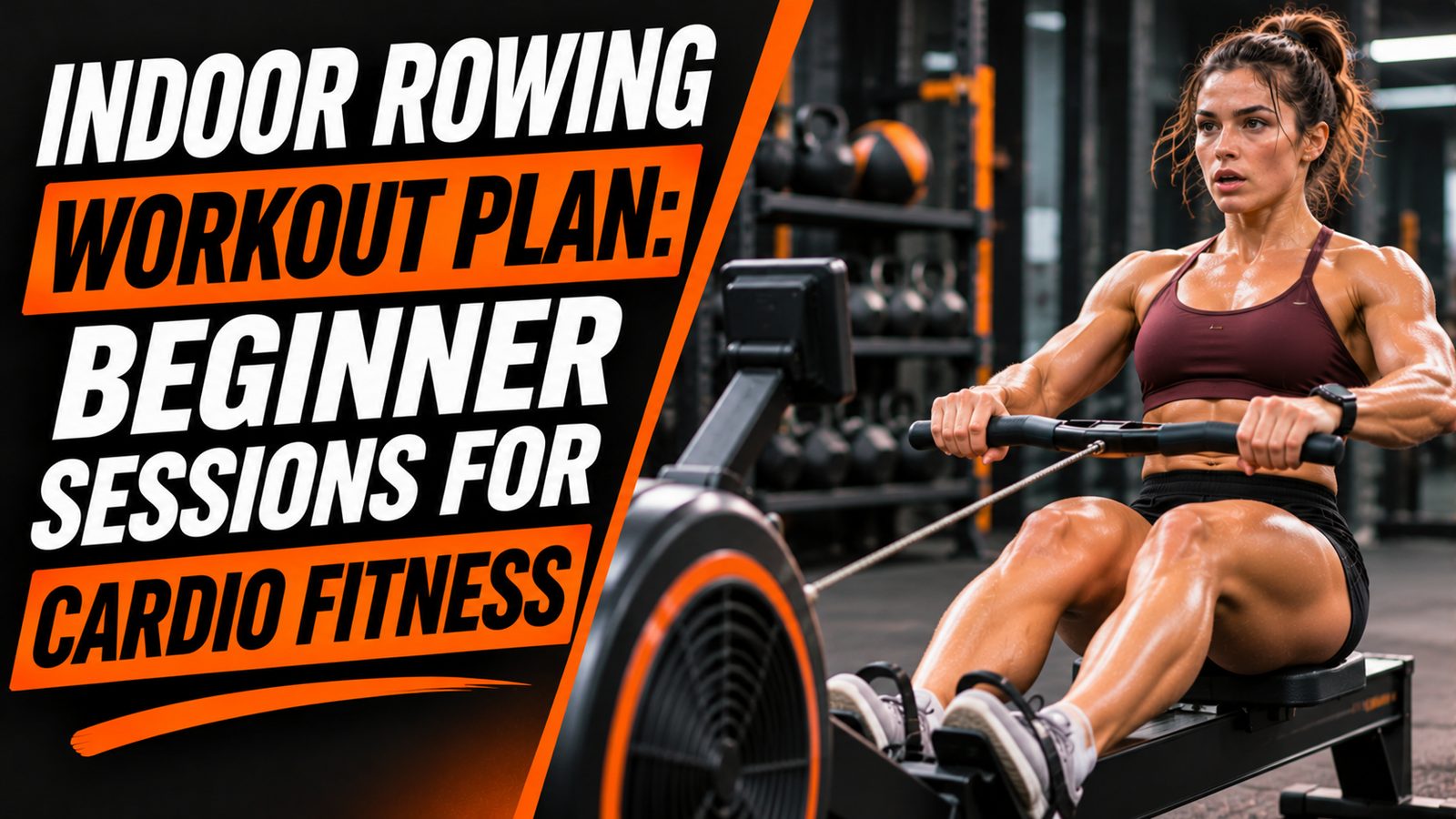
Indoor Rowing Workout Plan: Beginner Sessions for Cardio Fitness
An indoor rowing machine can look intimidating the first time you sit on one. The sliding seat moves, your feet are strapped in, and the handle seems to demand that your arms do all the work.
But rowing becomes much easier to understand once you learn the movement.
A well-designed indoor rowing workout plan can help beginners develop cardiovascular fitness, practise full-body coordination, and build a regular exercise habit without needing to run outdoors or depend on the weather.
The important thing is to start at the right pace.
You do not need to row as fast as possible, chase a particular calorie number, or finish your first session completely exhausted. In the beginning, learning the technique and choosing a sustainable effort level are more valuable than trying to beat a personal record.
This guide explains how indoor rowing works, how to use a rowing machine, which beginner sessions to try, and how to organize your first few weeks of training.
Whether you have a rowing machine at home or use one at the gym, you can adapt the sessions to your available time and current fitness level.
All Tools
What Is Indoor Rowing?
Indoor rowing is an exercise performed on a machine that reproduces the main movement of rowing a boat.
Most machines have a seat that slides along a rail, footrests, a handle, and a resistance mechanism. Depending on the model, resistance may come from air, water, magnets, or another system.
As you move through the rowing stroke, your legs, hips, back, shoulders, and arms work together to move the handle.
That makes rowing different from an exercise that relies mainly on one part of the body.
However, rowing is not automatically easy just because it is performed while sitting. It can become demanding when you increase the duration, pace, or resistance.
For beginners, the best starting point is a short session with controlled movements and an effort level that allows you to maintain your technique.
What Makes an Indoor Rowing Workout Useful for Cardio Fitness?
Rowing can be an effective way to practise sustained aerobic exercise.
Your heart and breathing rate increase as your body works to meet the demands of the session. With regular training, many people can gradually improve their ability to perform cardiovascular exercise.
Rowing also involves repeated movement from several major muscle groups, especially the legs and hips, along with the upper body.
Here are a few reasons beginners may enjoy it.
1. You Can Adjust the Intensity
You can change how hard you row by adjusting your pace, stroke rate, workout duration, and—in machines that allow it—the resistance setting.
This gives beginners room to start gently and build up gradually.
A five-minute introductory session can be useful when you are learning the movement. Later, you might extend your steady rowing sessions as your fitness improves.
2. It Provides a Structured Workout
Many rowing machines display information such as:
- Time
- Distance
- Stroke rate
- Split time or pace
- Estimated energy expenditure
- Power output
- All Tools
- BMI calculator
- Calorie calculator
- Macro calculator
- Body fat calculator
- One rep max calculator
The exact information depends on the machine.
These measurements can help you compare similar workouts over time. They are most useful when you focus on one or two indicators rather than trying to improve every number during every session.
3. It Is a Low-Impact Exercise Option
Indoor rowing does not involve the repeated foot strikes associated with running.
For some people, that makes it a useful alternative when they prefer lower-impact cardiovascular exercise.
However, low impact does not mean injury-proof. Rowing still requires repeated hip, knee, and back movements. Technique, training volume, and individual health all matter.
If you have persistent back pain, a significant joint problem, or a condition that affects exercise, seek appropriate professional guidance before starting.
4. It Can Fit Into a Busy Schedule
You do not need to reserve an entire afternoon for a rowing workout.
A short session can be a practical way to add movement to a busy day. As your routine develops, you can gradually increase the time you spend rowing.
Consistency matters more than making every session long.
Which Muscles Does Indoor Rowing Work?
Rowing uses several muscle groups in a coordinated sequence.
| Muscle group | Role during rowing |
|---|---|
| Quadriceps | Help extend the knees during the drive |
| Glutes | Contribute to hip extension |
| Hamstrings | Assist with hip movement and control |
| Core muscles | Help stabilize the torso |
| Back muscles | Contribute to pulling and controlling the handle |
| Biceps and forearms | Help maintain the grip and complete the pull |
| Shoulders | Help control the arms and handle |
The legs contribute substantially to the driving phase of the stroke. The arms are involved, but they should not be responsible for dragging the entire movement.
This is one of the most common misunderstandings among beginners.
If your arms become tired almost immediately, you may be pulling too early or using more upper-body effort than necessary.
Think of rowing as a coordinated movement rather than a seated arm exercise.
Before Your First Workout: Set Up the Rowing Machine
Take a few minutes to adjust the machine before starting.
A comfortable setup makes it easier to concentrate on the movement.
Adjust the Foot Straps
Place your feet on the footrests and secure the straps across the widest part of your feet, usually around the area near the base of your toes.
The straps should hold your feet securely without causing discomfort.
You should not need to grip with your toes or struggle to keep your feet in place.
Check Your Seating Position
Sit on the sliding seat and place your feet securely in the footrests.
Keep your shoulders relaxed and your grip comfortable.
The handle should feel secure without requiring you to squeeze it excessively.
Understand the Resistance Setting
Some machines have a damper or resistance control. Others provide resistance through a different mechanism.
Do not assume that the highest setting is best.
A very high setting can make the movement feel unnecessarily heavy and may encourage beginners to pull awkwardly.
Start with a manageable setting and learn to produce a smooth stroke.
Set a Short First Goal
For your first attempt, aim to practise for approximately five to eight minutes, including easy rowing and brief pauses if needed.
You can stop earlier if your technique becomes difficult to maintain.
The objective is to become familiar with the machine, not to prove how much effort you can tolerate.
Learn the Four Parts of the Rowing Stroke
A rowing stroke is often described in four stages: the catch, the drive, the finish, and the recovery.
Understanding these stages helps you coordinate the movement instead of pulling randomly on the handle.
1. The Catch
The catch is the starting position for the drive.
Your knees are bent, the seat is closer to the front of the machine, and your arms reach forward toward the handle.
Lean forward slightly from the hips while keeping your back in a comfortable, controlled position.
Do not force yourself into an extreme forward reach.
Your shoulders should remain relaxed rather than hunched toward your ears.
2. The Drive
The drive is the part where you push away from the footrests and move the handle toward your body.
The sequence matters.
Start with the legs.
Push through your feet and allow your knees to extend.
Then open the hips.
As your legs straighten, move your torso from a slight forward position toward a modest backward lean.
Finish with the arms.
Bring the handle toward the lower chest or upper abdomen, depending on your machine and technique.
The movement should feel coordinated rather than like three separate exercises performed at once.
3. The Finish
At the finish, your legs are extended without forcefully locking your knees, your torso is slightly leaned back, and the handle is close to your body.
Keep your shoulders relaxed.
Avoid leaning far backward or pulling the handle high toward your neck.
A controlled finish is enough.
4. The Recovery
The recovery returns you to the catch position.
Reverse the sequence you used during the drive.
First, extend your arms forward.
Next, hinge your torso forward slightly from the hips.
Finally, bend your knees and let the seat slide toward the front.
This order helps prevent your knees from rising too early and getting in the way of the handle.
The recovery should usually feel controlled and relaxed.
An Easy Way to Remember the Sequence
Use this cue:
Legs → Body → Arms
during the drive.
Then reverse it:
Arms → Body → Legs
during the recovery.
Practise slowly until the movement feels natural.
You do not need to row quickly while you are still learning the sequence.
How Hard Should Beginners Row?
The easiest way to begin is by using your perceived effort and breathing as guides.
You do not need a heart-rate monitor to complete the sessions in this plan.
Easy Effort
At an easy effort, breathing is only slightly elevated and conversation feels comfortable.
This is useful for learning technique, warming up, and cooling down.
Moderate Effort
At a moderate effort, breathing becomes more noticeable, but you can still speak in complete sentences.
This is a practical intensity for many beginner steady-state sessions.
Hard Effort
At a hard effort, breathing becomes substantially more demanding and speaking in full sentences may be difficult.
Beginners should not make this the default intensity for every session.
Short, controlled increases in effort may be introduced later, provided your technique remains sound and you recover comfortably.
Use the Talk Test
During a steady rowing workout, try saying a full sentence aloud.
If you can speak comfortably, your pace may be appropriate for an easy session.
If you can speak in complete sentences but need more frequent breaths, you may be working at a moderate intensity.
If you can barely say a few words, reduce the effort unless the session specifically calls for a brief, harder interval and you are prepared for it.
These are practical guides, not precise measurements of exercise intensity.
Your breathing response can vary with fitness, health, temperature, medication, and other factors.
Your First Indoor Rowing Workout
Before trying a longer session, use this short introduction.
Beginner Session 1: Learn and Move
Total time: Approximately 8 minutes
| Stage | Duration | Effort |
|---|---|---|
| Easy warm-up | 2 minutes | Very easy |
| Technique practice | 3 minutes | Easy |
| Comfortable steady rowing | 2 minutes | Easy to moderate |
| Cool-down | 1 minute | Very easy |
During the technique portion, pay attention to the order of the stroke.
Avoid trying to maintain a particular speed.
If you need a short pause to reset your feet or practise the movement, take it.
You can repeat this session until the machine feels familiar.
What Should You Notice?
You should feel the legs contributing to the drive.
The handle should travel smoothly toward your body.
Your shoulders should not be constantly lifting toward your ears, and your lower back should not be repeatedly rounding under strain.
It is normal for your breathing to become a little faster during the steady portion.
You should not feel compelled to finish the session at maximum effort.
How Long Should a Beginner Row?
There is no single duration that every beginner needs to follow.
Your starting point should depend on your current activity level, comfort with the technique, and ability to recover between sessions.
Here is a simple progression framework.
| Training stage | Example session duration | Main objective |
|---|---|---|
| First few sessions | 5–10 minutes | Learn the movement |
| Early practice | 10–15 minutes | Establish a comfortable rhythm |
| Building consistency | 15–20 minutes | Maintain steady effort |
| More comfortable beginner | 20–25 minutes | Extend aerobic exercise gradually |
These durations are examples, not deadlines.
You can remain at an earlier stage for longer if that suits your needs.
A person who already walks regularly may adapt to rowing differently from someone returning to exercise after a long inactive period.
The key is to increase duration gradually rather than jumping from a few minutes to a demanding half-hour session.
Common Beginner Rowing Mistakes
Correcting a few basic mistakes can make the workout more comfortable and easier to repeat.
Mistake 1: Pulling Mainly With the Arms
The rowing stroke begins with the legs driving against the footrests.
If you start by bending your elbows and pulling the handle, you may lose the coordinated movement that makes rowing effective.
Try this instead: Practise a few slow strokes while thinking about pushing with your feet before bending your arms.
Mistake 2: Rushing the Recovery
Some beginners rush forward immediately after pulling the handle in.
That can make the movement feel jerky and cause the next stroke to begin before the body is properly positioned.
Try this instead: Let the hands move away first, then move the torso forward, and finally bend the knees.
Mistake 3: Setting the Resistance Too High
A heavy resistance setting can feel impressive, but it is not a reliable measure of workout quality.
Try this instead: Use a manageable setting and focus on smooth movement, comfortable breathing, and consistent technique.
Mistake 4: Chasing Speed From the First Minute
Trying to row as quickly as possible often leads to rushed strokes and unnecessary fatigue.
Try this instead: Begin at an easy pace. Allow speed to develop naturally as your coordination improves.
Mistake 5: Rounding the Back Excessively
The torso moves during rowing, but repeatedly collapsing into a rounded position under load is not a useful technique goal.
Try this instead: Hinge from the hips, keep the trunk controlled, and avoid forcing an extreme reach at the front.
Mistake 6: Ignoring Discomfort
Muscular effort and faster breathing can be normal during exercise. Sharp pain, unusual back pain, chest discomfort, dizziness, or feeling faint are different.
Stop the session if concerning symptoms occur. Seek urgent medical help for serious symptoms such as chest pain, severe breathlessness, or fainting.
How Often Should Beginners Use a Rowing Machine?
Start with a frequency you can maintain.
For many beginners, two or three rowing sessions per week provide a reasonable introduction, provided the intensity and duration suit their current fitness.
You might begin with two short sessions and add a third when the routine feels manageable.
Try not to increase session length, intensity, and frequency all at once.
For example, if you currently row for 10 minutes twice per week, first become comfortable with those sessions. You could then extend one or both sessions slightly before adding harder intervals.
You can also combine rowing with walking, cycling, or other activities you enjoy.
A balanced exercise routine does not need to depend on one machine.
What You Have Learned So Far
The first stage of an indoor rowing workout plan is about building a reliable foundation.
You now know how to:
- Set up the rowing machine.
- Recognize the four stages of the stroke.
- Coordinate the legs, body, and arms.
- Choose a manageable starting intensity.
- Complete a short introductory session.
- Avoid several common technique mistakes.
- Begin organizing a weekly rowing routine.
Do not rush past this stage.
When the technique becomes more comfortable, it is easier to focus on your pace and workout structure.
The next step is to turn these basics into a practical training schedule with several types of beginner sessions.
Key Takeaway From Part 1
Indoor rowing is not about pulling harder on the handle. It is about coordinating the movement, choosing a manageable effort, and building your fitness over time.
Start with short sessions, practise the stroke sequence, and let consistency—not speed—guide your first few weeks.
Indoor Rowing Workout Plan: Beginner Sessions for Cardio Fitness — Part 2
Once the rowing stroke starts to feel familiar, you can move beyond simply practising the technique and begin following a structured routine.
The goal is not to make every workout harder than the previous one. Different sessions serve different purposes. Some help you practise a comfortable rhythm, while others introduce short changes in pace or gradually extend the time you spend exercising.
For beginners, a good indoor rowing workout plan should balance these elements without making recovery difficult.
The four-week schedule below provides a starting framework. Adjust the duration, take breaks when necessary, and repeat a week if you are not yet comfortable with the workload.
Your 4-Week Indoor Rowing Workout Plan
This plan assumes you can use a rowing machine safely and have no medical restriction that prevents moderate exercise.
If you are new to physical activity, begin with shorter sessions or follow the introductory workout from Part 1 before progressing.
Week 1: Get Comfortable With the Machine
Goal: Learn the stroke and establish a manageable routine.
During the first week, resist the temptation to chase distance or speed. Your main task is to become familiar with the movement and learn how to control your effort.
Session 1: Technique Practice
Total time: 8–10 minutes
- 2 minutes of very easy rowing
- 3 minutes of slow technique practice
- 2–3 minutes of comfortable rowing
- 1–2 minutes of easy cool-down
Concentrate on the sequence: legs, body, arms during the drive, followed by arms, body, legs during the recovery.
If you need to pause and reset, do so.
Session 2: Easy Continuous Rowing
Total time: 10 minutes
- 2 minutes easy
- 6 minutes at a comfortable pace
- 2 minutes easy
Keep your breathing controlled. You should be able to speak in complete sentences without struggling.
If maintaining the technique becomes difficult, slow down or take a short break.
Optional Session 3: Short Practice
Total time: 5–8 minutes
Repeat a short, easy session if you feel recovered and want more practice.
This third session is optional. Two sessions are enough to begin building a routine.
End-of-week check: Can you complete several minutes of rowing without rushing the recovery or relying almost entirely on your arms?
If not, spend another week practising before increasing the workload.
All Tools
- All Tools
- BMI calculator
- Wall Sit
- All workouts
- Water calculator
- One rep max calculator
- Protein calculator
- Upper Body Starter
- Six Pack Challenge
- Legs And Glutes
Week 2: Build a Steady Rhythm
Goal: Become more comfortable with continuous rowing.
In the second week, you can extend one session slightly if the first week felt manageable.
Session 1: Steady Row
Total time: 12 minutes
- 2 minutes easy
- 8 minutes at a comfortable, steady effort
- 2 minutes easy
Your pace should feel sustainable rather than challenging from the beginning.
Session 2: Controlled Pace Changes
Total time: 12–14 minutes
- 3 minutes easy
- 4 rounds of 30 seconds slightly quicker rowing followed by 60 seconds easy
- 3–5 minutes easy rowing
The quicker portions are not sprints. Increase your pace modestly while keeping the stroke smooth.
If you cannot maintain good technique, return to easy rowing.
Optional Session 3: Technique and Recovery
Total time: 8–10 minutes
Row easily and focus on the movement sequence.
This session should feel comfortable, not like another demanding workout.
End-of-week check: Can you keep a similar effort throughout an easy session without repeatedly speeding up and slowing down?
Week 3: Extend Your Aerobic Work
Goal: Increase comfortable rowing time without sacrificing technique.
By this stage, you may be ready for a longer session. If the previous week felt difficult, continue with the Week 2 schedule instead.
Session 1: Steady Row
Total time: 15 minutes
- 3 minutes easy
- 9 minutes at a comfortable, consistent effort
- 3 minutes easy
Try to finish feeling that you could have continued a little longer.
Session 2: Beginner Intervals
Total time: 15 minutes
- 3 minutes easy
- 5 rounds of 45 seconds at a moderately challenging pace followed by 75 seconds easy
- 2 minutes easy
Keep the quicker intervals controlled.
The purpose is to practise changing pace, not to reach your maximum speed.
Optional Session 3: Easy Technique Row
Total time: 10 minutes
Use a comfortable pace and pay attention to smooth transitions between the catch, drive, finish, and recovery.
End-of-week check: Are you recovering comfortably between sessions? Is your technique still controlled near the end of each workout?
If you feel unusually fatigued, reduce the duration or omit the optional session.
Week 4: Establish a Repeatable Routine
Goal: Find a weekly schedule that you can continue after the first month.
Week 4 is not a test. You do not need to beat your previous distance or complete the longest session possible.
Instead, use the week to identify the type of rowing routine that fits your life.
Session 1: Steady Row
Total time: 18–20 minutes
- 3 minutes easy
- 12–14 minutes at a comfortable, steady pace
- 3 minutes easy
If 20 minutes feels too demanding, use a shorter session.
Session 2: Controlled Intervals
Total time: 16–18 minutes
- 3 minutes easy
- 6 rounds of 45 seconds moderately challenging followed by 75 seconds easy
- 2–4 minutes easy
You should be able to complete each interval without your technique deteriorating.
Optional Session 3: Easy Row
Total time: 10–12 minutes
Row at a relaxed pace.
This can provide additional practice without making every training day demanding.
End-of-week check: Which sessions did you enjoy? Which duration felt sustainable? How well did you recover?
Use those answers to plan the following month.
Four-Week Plan at a Glance
| Week | Main focus | Example session duration | Sessions per week |
|---|---|---|---|
| 1 | Learn the stroke | 8–10 minutes | 2, with an optional third |
| 2 | Build a steady rhythm | 12–14 minutes | 2–3 |
| 3 | Extend aerobic work | 15 minutes | 2–3 |
| 4 | Establish a routine | 16–20 minutes | 2–3 |
These are suggested examples, not mandatory targets. You can repeat a week or reduce the duration whenever necessary.
Three Beginner Rowing Workouts You Can Rotate
A training plan becomes easier to follow when you know what each session is meant to achieve.
Instead of making every workout different, choose from a small selection of repeatable sessions.
Workout A: Easy Continuous Row
Best for: Technique practice and comfortable aerobic exercise.
Duration: 10–20 minutes, depending on your current ability.
Structure:
- Begin with 2–3 minutes of easy rowing.
- Continue at a comfortable pace.
- Keep your stroke smooth and controlled.
- Finish with 2–3 minutes of easy rowing.
During the middle section, try to maintain a reasonably consistent effort.
You do not have to keep the exact same split time or stroke rate throughout. The important point is to avoid unnecessary surges in speed.
This workout is useful when you want a straightforward session without complicated intervals.
Workout B: Gentle Interval Row
Best for: Practising changes in pace.
Duration: Approximately 12–18 minutes.
Structure:
- Warm up for 3 minutes.
- Row slightly faster for 30–45 seconds.
- Return to an easy pace for 60–90 seconds.
- Repeat the quicker and easier portions several times.
- Cool down for 2–3 minutes.
The faster portions should feel controlled.
If your shoulders tense up, your back position changes, or your stroke becomes rushed, reduce the pace.
You can progress this workout by adding one interval or making the faster portions slightly longer. You do not need to increase both at once.
Workout C: Technique-Focused Row
Best for: Beginners who are still learning the movement.
Duration: 8–12 minutes.
Structure:
- Row easily for 2 minutes.
- Practise several slow, controlled strokes.
- Row comfortably for 2–3 minutes.
- Take a short pause if you need to reset.
- Finish with easy rowing.
During this session, focus on one technical detail at a time.
For example, spend one session working on the order of the drive. During another, concentrate on allowing your arms to extend before your knees bend during the recovery.
Trying to correct every detail at once can make the movement feel unnecessarily complicated.
A 10-Minute Indoor Rowing Workout
Short workouts can be useful on days when your schedule is crowded.
However, a 10-minute workout is still exercise. You should use a manageable pace and include time to warm up and cool down.
The Routine
| Time | Activity |
|---|---|
| Minutes 0–2 | Very easy rowing |
| Minutes 2–7 | Comfortable, steady rowing |
| Minutes 7–9 | Slightly quicker rowing if comfortable |
| Minutes 9–10 | Easy cool-down |
The quicker portion is optional.
If you are still learning the technique, spend the entire session at an easy pace instead.
The aim is to make movement part of your day, not to squeeze an intense workout into every available gap.
A 15-Minute Indoor Rowing Workout
Once you can row comfortably for about 10 minutes, you may choose to try a slightly longer session.
The Routine
| Time | Activity |
|---|---|
| Minutes 0–3 | Easy warm-up |
| Minutes 3–11 | Comfortable steady rowing |
| Minutes 11–13 | Slightly quicker pace, if appropriate |
| Minutes 13–15 | Easy cool-down |
Keep the pace changes modest.
If you would rather focus on building endurance, row at a steady effort for the entire middle section.
There is no requirement to add intervals just because the workout includes time for them.
A 20-Minute Indoor Rowing Workout
This session may suit a beginner who has developed a comfortable rowing rhythm and can maintain good technique for longer periods.
The Routine
| Time | Activity |
|---|---|
| Minutes 0–3 | Easy warm-up |
| Minutes 3–8 | Comfortable steady rowing |
| Minutes 8–13 | Continue at a similar effort |
| Minutes 13–17 | Maintain the pace or reduce it if needed |
| Minutes 17–20 | Easy cool-down |
This is primarily a steady session rather than an interval workout.
The middle section should feel manageable enough that you can maintain your movement quality.
If 20 minutes is currently too long, stop at 12 or 15 minutes and build up gradually.
Should You Use Stroke Rate to Control Your Workout?
Most rowing machines display a stroke-rate measurement, usually expressed as strokes per minute.
It can be helpful, but beginners should not treat a higher number as a sign of better performance.
A faster stroke rate may be appropriate during some workouts, while a lower rate may suit a controlled steady session.
The best rate depends on your technique, intensity, machine, and training experience.
For beginners, a comfortable rate that allows a smooth drive and recovery is more useful than forcing yourself to match a number.
Why Faster Is Not Always Better
Imagine two people rowing at different stroke rates.
The first person uses controlled movements, pushes effectively with the legs, and returns smoothly to the catch.
The second person moves rapidly but rushes the recovery and pulls mostly with the arms.
The second person may display a higher stroke rate without necessarily producing a better-quality workout.
Focus on the quality of each stroke before trying to increase the number of strokes per minute.
Understanding Split Time and Distance
Many rowing machines show a split time, often the time required to cover 500 metres at your current pace.
A lower split time generally indicates a faster pace.
For example, a displayed split of 2:30 per 500 metres represents a faster pace than 3:00 per 500 metres.
However, you should compare your results under similar conditions.
Different machines may use different displays, settings, and measurement systems. Technique and resistance can also influence how the workout feels.
How Beginners Can Use Split Time
Rather than trying to reach a particular number immediately:
- Record your pace during a comfortable session.
- Notice whether you can maintain it without losing technique.
- Repeat a similar workout another day.
- Compare the results only when the duration and effort are reasonably similar.
You may eventually notice that a familiar effort produces a faster split time.
That can be a useful sign of progress, but one reading alone does not tell the whole story.
How to Track Progress Without Becoming Obsessed With Numbers
Rowing machines provide a lot of feedback, but you do not need to monitor everything.
Choose two or three measurements that help you understand your training.
Useful options include:
Workout duration: How long did you row?
Average pace: Could you maintain a similar effort throughout the session?
Perceived effort: Did the workout feel easy, moderate, or difficult?
You can also record how your technique felt and whether you recovered comfortably afterward.
A simple training log might look like this:
| Date | Session | Duration | Effort | Notes |
|---|---|---|---|---|
| Monday | Easy row | 10 min | Easy | Practised recovery sequence |
| Wednesday | Steady row | 12 min | Moderate | Pace felt controlled |
| Saturday | Technique row | 8 min | Easy | Focused on leg drive |
These are illustrative entries. Your actual durations and effort levels should reflect your current ability.
Over several weeks, the log can help you notice patterns that are difficult to remember from one workout to the next.
How to Progress Without Overdoing It
Progress does not require a new challenge every time you use the machine.
Choose one aspect of the workout to adjust.
For example:
- Add a few minutes to a steady session.
- Add one short interval.
- Maintain the same duration with smoother technique.
- Keep the pace consistent for longer.
- Reduce unnecessary rushing during recovery.
Avoid increasing duration, intensity, and weekly frequency simultaneously.
If you extend your steady session from 10 minutes to 15 minutes, keep the pace comfortable rather than also trying to row much faster.
If you add intervals, do not automatically increase the total workout time as well.
This makes it easier to identify what your body tolerates and gives you room to adjust when necessary.
Combining Indoor Rowing With Walking
You do not have to choose between rowing and walking.
Both can contribute to a broader physical-activity routine.
Rowing provides a structured machine-based workout, while walking is often easy to fit into breaks, errands, or time outdoors.
A simple weekly example could be:
| Day | Activity |
|---|---|
| Monday | Easy rowing |
| Tuesday | Comfortable walk |
| Wednesday | Rest or normal daily movement |
| Thursday | Rowing intervals, if appropriate |
| Friday | Comfortable walk |
| Saturday | Optional easy rowing |
| Sunday | Rest or recreational activity |
This is only an example. You can move the sessions around your work, family commitments, and recovery needs.
If you are new to both activities, begin with shorter sessions and gradually establish a routine.
Combining Rowing With Strength Training
Rowing can complement resistance training, but it is worth considering how demanding the sessions are.
If you perform a challenging leg workout and then immediately attempt a hard rowing session, your legs may already be fatigued.
That does not mean the activities cannot be combined. It simply means that exercise order, intensity, and recovery matter.
A beginner could use an arrangement such as:
- Two days of rowing
- Two days of full-body resistance training
- Easy walking on other days, as comfortable
Alternatively, you might row briefly after a strength session if your technique remains controlled and the added work fits your recovery.
There is no need to perform every type of exercise every day.
What If You Feel Tired During a Rowing Session?
First, distinguish ordinary exercise effort from symptoms that require you to stop.
If your breathing is becoming more demanding than expected or your technique is deteriorating, reduce the pace.
You can also take a short break.
If you are repeatedly struggling to complete a session, consider whether you started too quickly, chose a duration that was too long, or are not recovering between workouts.
Stop exercising if you experience chest pain, dizziness, faintness, unusual severe breathlessness, or other concerning symptoms. Seek appropriate medical care, particularly if symptoms are severe or persistent.
A beginner's training plan should be flexible enough to accommodate changes in energy and recovery.
Common Mistakes When Following a Rowing Plan
1. Treating Every Session as a Test
Not every workout needs to produce a personal best.
Easy sessions provide opportunities to practise technique and accumulate manageable exercise time.
2. Increasing the Resistance Instead of Improving Technique
A higher resistance setting does not automatically make the session more useful.
Focus on smooth movement and appropriate effort before experimenting with heavier settings.
3. Making the Fast Intervals Too Hard
If the quicker portions leave you unable to maintain good technique, they are too demanding for your current level.
Reduce the pace or return to steady rowing.
4. Ignoring the Warm-Up
Starting abruptly at a hard pace can make the session feel unnecessarily difficult.
Begin easily and allow your breathing and movement to settle into a rhythm.
5. Increasing Everything at Once
Adding time, intervals, resistance, and extra weekly sessions together makes the plan harder to manage.
Change one variable at a time.
6. Comparing Your Numbers With Other People
Your results depend on your fitness, technique, body size, experience, machine, and workout conditions.
Another person's split time is not a useful starting target for you.
7. Continuing When Your Technique Falls Apart
Fatigue can make it harder to coordinate the stroke.
If you start rounding your back excessively, rushing the recovery, or pulling awkwardly, reduce the pace or stop the session.
A shorter workout with controlled movement is preferable to forcing yourself through poor-quality repetitions.
What Should You Do After the First Four Weeks?
Once you complete the introductory plan—or feel comfortable with its earlier stages—you can choose the next step based on your goals.
If You Want Better General Cardio Fitness
Continue with two or three manageable rowing sessions each week.
Gradually extend one steady session if you recover well.
If You Enjoy Interval Training
Keep one interval session in your routine and make the other sessions easier.
You do not need to turn every rowing day into a hard workout.
If You Prefer Short Workouts
Continue using 10- or 15-minute sessions.
Short sessions can be a practical way to maintain an exercise habit, especially during busy weeks.
If You Are Interested in Longer Sessions
Increase your steady rowing time gradually.
Do not assume that you must reach 30 or 45 minutes to benefit from exercise.
Your routine should reflect your current fitness and the amount of time you can realistically set aside.
Part 2 Summary
A useful indoor rowing workout plan gives each session a clear purpose.
Easy rows help you practise the movement and develop a comfortable rhythm. Steady sessions allow you to work at a sustainable effort. Short intervals introduce controlled changes in pace when you are ready for them.
The four-week schedule offers a possible starting point, but it is not a deadline.
Repeat sessions when necessary, shorten workouts when you are tired, and progress only when the current workload feels manageable.
The most valuable result is not a single fast split time.
It is developing a routine you can repeat while maintaining good technique and recovering comfortably.
Conclusion: Build Your Cardio Fitness With Indoor Rowing
Starting a new workout routine can feel difficult when you are unsure how long to exercise, how hard to push yourself, or which training plan to follow. An indoor rowing machine gives you a straightforward way to practise cardiovascular exercise while learning a coordinated, full-body movement.
The key is to begin with a routine that matches your current fitness rather than copying the workouts of experienced rowers.
A good indoor rowing workout plan does not need complicated intervals, extreme resistance, or long sessions from day one. Start with short workouts, learn the rowing sequence, and gradually increase your training time as your technique and fitness develop.
During your first week, you might focus on 8–10 minutes of comfortable rowing. Later, you could build toward 15–20-minute sessions if you feel ready. You can also introduce gentle intervals once you can maintain a smooth stroke.
Remember that progress is not measured only by the distance displayed on the rowing machine.
Being able to row for longer at a comfortable effort, maintain better technique, or recover more easily after a session can also be meaningful signs of improvement.
Your Simple Starting Plan
If you are unsure where to begin, follow these steps:
- Learn the technique. Practise the catch, drive, finish, and recovery.
- Start with short sessions. Choose a duration you can complete without rushing.
- Keep most early workouts comfortable. Use your breathing and perceived effort to guide your pace.
- Train consistently. Begin with two sessions per week if that fits your current fitness.
- Progress gradually. Add a little time or introduce a small amount of faster rowing when appropriate.
- Pay attention to recovery. Reduce the workload if you feel unusually tired or your technique deteriorates.
- Make the routine fit your life. A manageable 10-minute workout is more practical than a demanding session you cannot repeat.
You can also combine rowing with walking, resistance training, and other activities you enjoy.
There is no need to make every workout difficult. A balanced routine that you can maintain is a sensible foundation for long-term cardiovascular fitness.
Start at your own pace, focus on smooth movement, and give yourself time to improve. Your first rowing session is simply the beginning of the process.
Call to Action (CTA)
Ready to make indoor rowing part of your fitness routine?
Start with a short, comfortable session and focus on learning the movement before worrying about speed or distance. Choose two days this week to practise, record how each workout feels, and gradually build from there.
You do not need to be an experienced athlete to begin. You need a manageable starting point and a routine that works with your schedule.
Save this indoor rowing workout plan, choose your first session, and start building your cardio fitness one stroke at a time.
FAQ 1: Is indoor rowing good for beginners?
Yes. Indoor rowing can be suitable for beginners because the workout duration and effort can be adjusted. New users should learn the technique, start with short sessions, and increase the workload gradually. Anyone with a relevant medical condition or injury should seek appropriate professional advice before beginning.
FAQ 2: How long should a beginner row on a rowing machine?
A beginner might start with approximately 5–10 minutes of easy rowing, including time to practise the technique. As the movement becomes more comfortable, the session can gradually increase to 15–20 minutes or longer, depending on individual fitness and recovery.
FAQ 3: How many days a week should beginners use a rowing machine?
Two or three sessions per week can be a practical starting point for many beginners. The appropriate frequency depends on current activity levels, workout intensity, recovery, and other exercise. Start conservatively rather than trying to row every day immediately.
FAQ 4: Can indoor rowing improve cardiovascular fitness?
Regular rowing can contribute to cardiovascular fitness when performed at an appropriate intensity and combined with consistent training. Beginners can start with comfortable continuous sessions and gradually increase their exercise time as their fitness develops.
FAQ 5: Is indoor rowing a full-body workout?
Indoor rowing involves several major muscle groups, including the quadriceps, glutes, hamstrings, trunk muscles, back, shoulders, and arms. The legs play an important role in the drive, so the movement should not be treated as an arm-only exercise. Rowing does not replace every form of strength training.
FAQ 6: Is rowing better than walking for cardio fitness?
Neither is automatically better for everyone. Rowing provides machine-based exercise that involves coordinated movement from the upper and lower body, while walking is accessible and easy to include in everyday life. The most suitable option depends on personal preference, fitness, physical limitations, and consistency. Both can contribute to an active lifestyle.
FAQ 7: What is a good rowing machine workout for beginners?
A simple beginner workout includes 2–3 minutes of easy rowing, several minutes of comfortable continuous rowing, and 1–3 minutes of easy rowing to finish. Start with a short total duration and extend it gradually when you can maintain controlled technique.
FAQ 8: Should beginners use high resistance on a rowing machine?
Not necessarily. Beginners should choose a manageable resistance setting and concentrate on smooth technique. A higher setting is not automatically more effective and may encourage excessive effort. The best setting depends on the machine, the workout, and the individual's ability to maintain controlled movement.
FAQ 9: Can I lose weight with an indoor rowing workout plan?
Indoor rowing can contribute to energy expenditure and may support a weight-management plan. However, weight change depends on several factors, including overall food intake, activity levels, sleep, and consistency. Rowing alone does not guarantee weight loss, and calorie estimates displayed by machines may not be exact.
FAQ 10: How can I improve my rowing machine performance?
Start by improving your technique and maintaining a consistent, manageable effort. Record workout duration and pace, then compare similar sessions over time. Gradually increase the duration or introduce controlled intervals when appropriate. Avoid chasing speed at the expense of technique or recovery.
Stop reading, start moving
Reading about training is the easy part. Fifteen minutes today beats a fortnight of research - and all of it is free.
Start Free