Walking vs Running for Weight Loss: Which Burns More?
Walking vs running for weight loss: compare calorie burn, fat loss, effort, joint impact, and sustainability to choose the right workout for you.
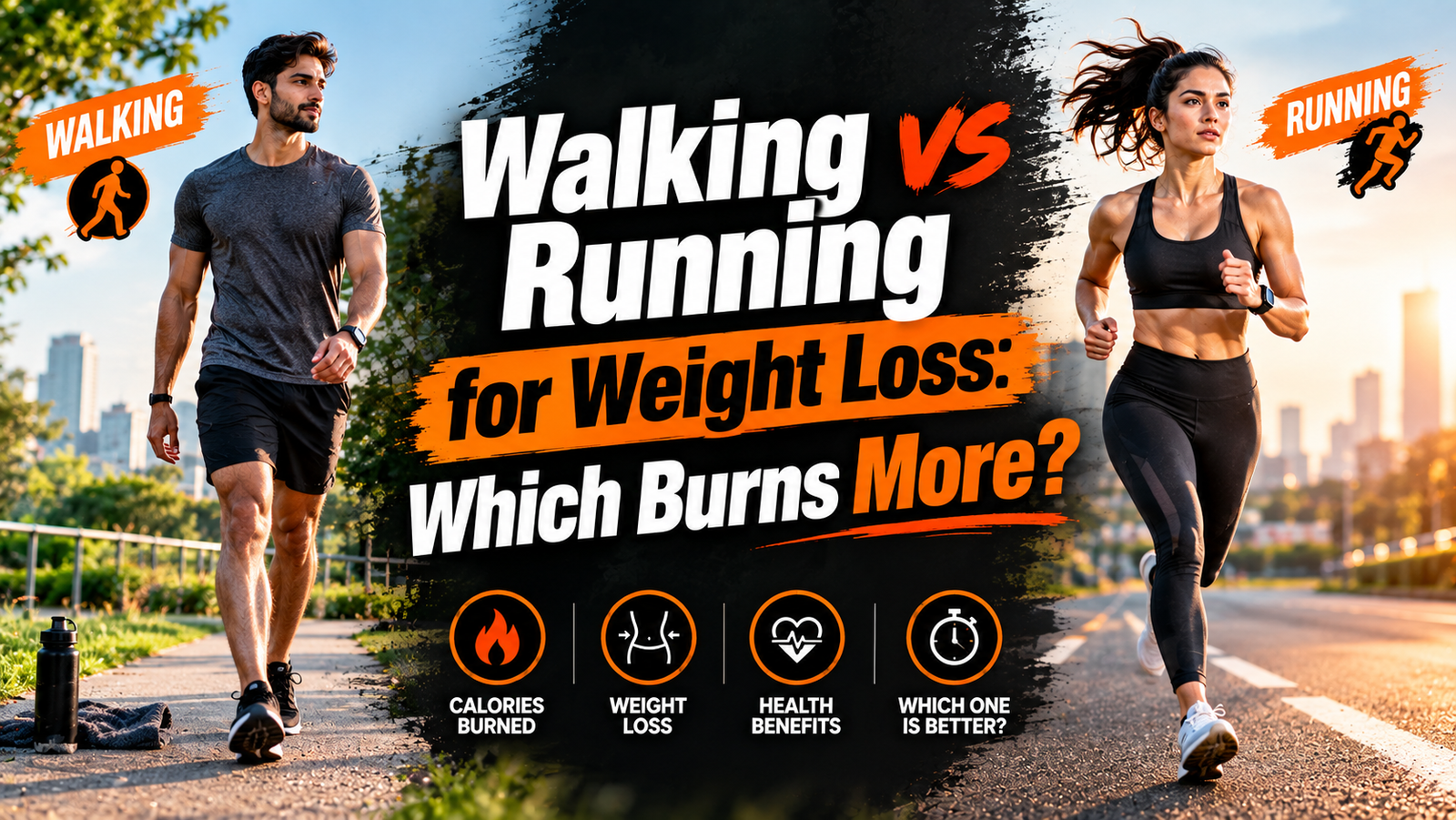
Walking vs Running for Weight Loss: Which Burns More?
When it comes to weight loss, one question comes up again and again: walking vs running for weight loss—which is better?
Running usually burns more calories per minute because it requires greater effort. But that does not automatically mean running is the better choice for everyone.
Walking can be easier to start, easier to recover from, and easier to fit into a busy routine. Running can provide a higher calorie burn in less time, but it also places more physical demand on the body.
The best choice depends on several factors, including your current fitness level, body weight, workout duration, consistency, recovery, and personal preferences.
So, does walking or running burn more calories? In most situations, running burns more calories per minute. However, the bigger weight-loss picture is more complicated.
Let's compare walking and running so you can decide which approach makes sense for your goals.
Walking vs Running for Weight Loss: The Basic Difference
Both walking and running are forms of aerobic exercise. They increase energy expenditure and can contribute to a calorie deficit when combined with an appropriate diet.
The main difference is exercise intensity.
Walking generally uses a lower intensity. Running requires more effort and increases breathing, heart rate, and energy expenditure more quickly.
For example, a comfortable walk may allow you to hold a conversation without much difficulty. During a run, you will usually breathe more heavily and may need to pause between sentences.
This difference in intensity is one major reason running generally burns more calories per minute than walking.
However, calorie burn is only one part of successful weight loss.
Walking vs Running at a Glance
| Factor | Walking | Running |
|---|---|---|
| Intensity | Low to moderate | Moderate to vigorous |
| Calories per minute | Generally lower | Generally higher |
| Impact | Lower | Higher |
| Beginner-friendly | Usually very accessible | May require gradual progression |
| Recovery needs | Often lower | Usually higher |
| Time required for similar calorie burn | Usually more | Usually less |
| Equipment | Minimal | Minimal, but proper shoes matter |
| Sustainability | Often easy to maintain | Depends on fitness and recovery |
| Weight-loss potential | Yes | Yes |
The important point is that both can support weight loss.
The question is not simply which exercise burns more. It is also which one you can perform consistently without excessive fatigue, pain, or burnout.
Does Running Burn More Calories Than Walking?
In general, running burns more calories per minute than walking because running requires greater effort.
But your actual calorie expenditure depends on factors such as:
- All Tools
- BMI calculator
- Calorie calculator
- Macro calculator
- Body fat calculator
- One rep max calculator
- Body weight
- Walking or running speed
- Workout duration
- Terrain
- Incline
- Fitness level
- Individual movement efficiency
- Weather and environmental conditions
A heavier person may expend more energy performing the same activity than a lighter person. Similarly, walking uphill can require considerably more effort than walking on a flat surface.
This means there is no single calorie number that applies to everyone.
Why Running Usually Burns More
Running involves greater movement intensity and typically requires more energy from the body.
As speed increases, your muscles have to produce more force and your cardiovascular system has to work harder.
That increased workload generally results in a higher energy expenditure per minute.
However, more calories burned per minute does not necessarily mean more total calories burned across your week.
For example, someone may be able to walk for 60 minutes comfortably but only run for 20 minutes before needing to stop.
In that situation, the walking session may still contribute a meaningful amount of total energy expenditure.
Walking Can Still Be Effective for Weight Loss
Walking is sometimes underestimated because it feels easier than running.
But an activity does not need to feel extreme to be useful.
A regular walking routine can increase daily physical activity and help you expend more energy throughout the day. It can also be easier for many beginners to perform frequently.
For example, someone could build a routine around:
- A 30-minute morning walk
- A 10-minute walk after lunch
- A 20-minute evening walk
- More daily steps through normal activities
These small periods of movement can add up.
The key is consistency over time.
If walking is an activity you enjoy and can repeat regularly, it may be a practical part of a long-term weight-management strategy.
Walking vs Running for Fat Loss: Is One Better?
Fat loss and calorie burn are related, but they are not exactly the same thing.
Your body uses a mixture of stored and recently consumed energy during exercise. The proportion can vary depending on exercise intensity, duration, food intake, fitness level, and other factors.
It is therefore misleading to judge an exercise entirely by whether it appears to burn more fat during the workout.
For long-term weight loss, the larger consideration is whether your overall energy intake and expenditure create a sustainable calorie deficit.
That means running is not automatically better for fat loss just because it burns more calories per minute.
Likewise, walking is not ineffective simply because it burns fewer calories per minute.
Your overall routine matters much more.
What Actually Causes Weight Loss?
Weight loss generally occurs when the body uses more energy than it receives from food over time.
Exercise can increase energy expenditure, while nutrition determines how much energy you consume.
This creates an important distinction:
Exercise can support a calorie deficit, but exercise alone does not guarantee weight loss.
Someone could run regularly and still struggle to lose weight if their overall food intake consistently offsets the calories they burn.
On the other hand, someone who walks regularly and follows a suitable eating pattern may make steady progress.
This is why the best weight-loss workout is rarely just the exercise with the highest calorie burn.
It is the exercise that fits into a complete and sustainable lifestyle.
Walking vs Running: Which Is Better for Beginners?
For many beginners, walking is the easier starting point.
Walking requires less technical skill and generally places less impact on the joints than running.
If you have been inactive for a long time, starting with walking can help you establish an exercise habit before introducing higher-intensity activity.
A beginner might start with:
- 15–20 minutes of comfortable walking
- Gradually increase the duration
- Add short periods of faster walking
- Build toward longer sessions
- Introduce jogging intervals if appropriate
There is no requirement to start running immediately.
A Simple Beginner Walking Workout
Try this basic 25-minute session:
| Stage | Duration | Effort |
|---|---|---|
| Warm-up | 5 minutes | Easy |
| Brisk walk | 15 minutes | Moderate |
| Cool-down | 5 minutes | Easy |
The goal is not to finish exhausted.
Instead, focus on creating a routine that you can repeat consistently.
When Running May Be the Better Choice
Running may make sense if you:
- 28 Day Abs Starter
- Six Pack Challenge
- Legs And Glutes
- 14 Day Kickstart
- HIIT Fat Burn
- Already have a reasonable fitness base
- Enjoy running
- Have limited workout time
- Can recover well between sessions
- Have no injury or medical limitation preventing you from running
- Prefer higher-intensity exercise
Because running generally burns more calories per minute, it can be useful for people who want to achieve a substantial workout in a shorter period.
For example, someone with limited time may prefer a 25-minute run rather than a longer walking session.
But more intensity also means you need to pay attention to recovery.
When Walking May Be the Better Choice
Walking may be a better option if you:
- Are new to exercise
- Have a lower fitness level
- Prefer lower-impact activity
- Want to exercise more frequently
- Find running uncomfortable
- Have difficulty recovering from high-intensity workouts
- Simply enjoy walking more
Enjoyment matters more than many people realize.
If you dislike running and repeatedly force yourself to do it, maintaining the routine can become difficult.
A walking routine that you actually follow may be more useful than a theoretically superior running plan that you abandon after a few weeks.
Is Brisk Walking Better Than Slow Walking for Weight Loss?
Brisk walking generally requires more energy than very slow walking.
It can therefore be a useful way to increase the intensity of your workout without immediately moving into running.
A brisk walking pace should feel purposeful. You may notice that your breathing becomes faster, but you can often still speak in short sentences.
Your ideal pace will depend on your fitness level.
Instead of focusing only on a specific speed, pay attention to how your body feels.
Ways to Make Walking More Challenging
If regular walking becomes too easy, you can gradually increase the challenge by:
- Walking faster
- Walking for longer
- Adding gentle hills
- Using an incline on a treadmill
- Adding another walking session
- Including short brisk intervals
Progress should be gradual rather than dramatic.
Walking vs Running and Joint Impact
One important difference between walking and running is the amount of impact involved.
Running creates repeated impact as your body leaves and returns to the ground. Walking generally involves a lower-impact movement pattern.
This does not mean running is inherently harmful.
Many healthy people run regularly without problems.
However, if you are new to exercise, have persistent pain, or have a history of certain injuries, jumping directly into frequent running may not be the best approach.
In such cases, gradually increasing walking volume may provide a more comfortable starting point.
If you have a medical condition or ongoing pain that affects exercise, consider speaking with a qualified healthcare or exercise professional before starting a new training program.
Can Walking Help You Lose Weight Without Running?
Yes.
You do not need to run to lose weight.
Walking can be part of a successful weight-loss plan when it contributes to an overall sustainable calorie deficit.
A practical approach may include:
- Regular walking
- A balanced eating pattern
- Adequate protein and nutrient-dense foods
- Strength training when appropriate
- Sufficient sleep
- Consistent daily movement
The goal is not to find one magical exercise.
The goal is to build a routine that supports your health and that you can maintain for months rather than just a few days.
Walking vs Running: The Role of Consistency
Consistency is one of the most important factors when comparing walking and running for weight loss.
Imagine two people.
Person A runs twice a week but often skips workouts because running feels exhausting.
Person B walks for 45 minutes on most days and enjoys the routine.
Although running is more intense, Person B may accumulate substantially more weekly activity.
This illustrates why exercise choice should be based on more than calorie burn per minute.
A sustainable routine gives you more opportunities to accumulate physical activity over time.
Should You Walk or Run for Weight Loss?
If you are trying to choose between walking and running, start by asking yourself four questions:
- What can I do consistently?
- What fits my current fitness level?
- How much time do I have?
- Can I recover comfortably from it?
If you are a beginner, walking is often a sensible starting point.
If you are already fit and enjoy running, running can be an efficient way to increase exercise intensity.
And you do not necessarily have to choose only one.
A combination of walking and running can provide flexibility.
For example, you might walk on easier days and run on selected days, depending on your fitness level and recovery.
The best approach is the one that helps you stay active consistently while supporting your overall nutrition and lifestyle.
How Many Calories Does Walking vs Running Burn?
The exact number of calories burned during walking or running varies from person to person. Body weight, pace, terrain, duration, fitness level, and other factors all influence energy expenditure.
This is why calorie estimates from treadmills, smartwatches, and online calculators should be treated as rough estimates rather than exact measurements.
As a general rule:
- Walking burns fewer calories per minute.
- Brisk walking burns more than slow walking.
- Running burns more calories per minute than walking at typical recreational speeds.
- Longer workouts can increase total calorie expenditure.
- Hills and inclines can increase the effort required for either activity.
Instead of becoming overly focused on a single calorie number, use exercise duration and consistency as practical measures of progress.
Example: Walking vs Running
Imagine two workouts:
| Workout | Duration | Relative Intensity | Typical Energy Demand |
|---|---|---|---|
| Easy walk | 30 minutes | Low | Lower |
| Brisk walk | 30 minutes | Moderate | Moderate |
| Fast walk uphill | 30 minutes | Moderate to vigorous | Higher |
| Easy run | 30 minutes | Vigorous | Generally higher |
| Faster run | 30 minutes | Vigorous | Generally higher |
These are not fixed calorie values because two people performing the same workout can have different energy expenditure.
The useful takeaway is simple:
Running generally burns more calories in the same amount of time, but walking can still produce meaningful energy expenditure when performed regularly and for long enough.
Walking vs Running for Weight Loss: What If You Have Limited Time?
If your biggest limitation is time, running may have an advantage.
A higher-intensity workout can allow you to achieve a substantial training stimulus in a shorter session.
However, this does not mean you should automatically choose running.
Consider your recovery.
If a 20-minute run leaves you exhausted and prevents you from exercising for several days, while a 40-minute brisk walk feels manageable and can be repeated frequently, the walking approach may work better for your overall weekly activity.
A Simple Decision Rule
Use this framework:
Very limited time + good fitness + enjoy running → consider running.
More available time + prefer low-impact exercise → consider walking.
Beginner + currently inactive → start with walking.
Enjoy both → combine them.
This approach avoids treating exercise as a one-size-fits-all decision.
Brisk Walking vs Jogging: Which Should You Choose?
There is a useful middle ground between casual walking and continuous running.
That is brisk walking and walk-jog intervals.
Brisk walking increases your effort without requiring you to run. Walk-jog intervals allow you to introduce running gradually.
For example:
Beginner Walk-Jog Workout
| Stage | Duration |
|---|---|
| Easy warm-up walk | 5 minutes |
| Brisk walk | 3 minutes |
| Easy jog | 1 minute |
| Brisk walk | 3 minutes |
| Easy jog | 1 minute |
| Repeat | 3–4 rounds |
| Cool-down walk | 5 minutes |
You can adjust the duration according to your current fitness level.
If jogging feels uncomfortable, there is no requirement to progress immediately.
You can continue improving through walking alone.
A 30-Minute Walking Workout for Weight Loss
A simple walking workout can be structured around changes in pace.
Workout
5 minutes — Easy walking
Use this period to gradually warm up.
10 minutes — Brisk walking
Increase your pace until you feel that you are working, but you can still speak.
5 minutes — Easy walking
Allow your breathing to settle.
5 minutes — Brisk walking
Return to your purposeful pace.
5 minutes — Cool-down
Finish with comfortable walking.
This type of session can be easier to repeat than an extremely demanding workout.
The goal is not to make every workout exhausting.
A 30-Minute Running Workout for Beginners
Running beginners should generally avoid treating every session like a race.
A more gradual approach is to alternate walking and jogging.
Example
| Stage | Duration |
|---|---|
| Warm-up walk | 5 minutes |
| Easy jog | 1 minute |
| Walk | 2 minutes |
| Repeat | 6–7 rounds |
| Cool-down walk | 5 minutes |
The running intervals should feel controlled.
You should finish the session feeling that you could have done a little more rather than completely exhausted.
As fitness improves, you can gradually increase jogging time and reduce walking time.
Can You Combine Walking and Running for Weight Loss?
Absolutely.
A combination can be especially useful if you want the higher intensity of running while still keeping some lower-intensity sessions in your routine.
For example:
| Day | Workout |
|---|---|
| Monday | 30–45 min brisk walk |
| Tuesday | Rest or easy movement |
| Wednesday | Walk-jog intervals |
| Thursday | Easy walk |
| Friday | Rest |
| Saturday | Longer walk or easy run |
| Sunday | Easy recovery walk |
This is only an example, not a mandatory schedule.
Your ideal weekly routine depends on your fitness level, schedule, recovery, and goals.
Why Combine Them?
Combining walking and running can give you:
- Different exercise intensities
- More variety
- Easier recovery days
- Opportunities to build running gradually
- More flexibility when your schedule changes
You also do not need to run every day to benefit from running.
Walking vs Running: Pros and Cons
Walking Pros
- Easy to start
- Generally lower impact
- Can be performed frequently
- Requires little equipment
- Can fit into daily activities
- Useful for beginners
- Often easier to recover from
Walking Cons
- Usually burns fewer calories per minute
- Longer sessions may be needed for higher energy expenditure
- Casual walking may not provide enough challenge as fitness improves
- Some people may find it less exciting than running
Running Pros
- Generally higher calorie expenditure per minute
- Efficient when workout time is limited
- Can improve cardiovascular fitness
- Requires relatively little equipment
- Can be progressed through speed and distance
Running Cons
- Higher physical demand
- Greater impact than walking
- May require more recovery
- Beginners need to progress gradually
- Poor training progression can contribute to overuse problems
Neither list makes one exercise universally superior.
The right choice depends on the individual.
Common Mistakes When Using Walking for Weight Loss
Mistake 1: Walking Too Slowly Every Time
An easy walk still counts as movement, but if your goal is to increase exercise intensity, you may eventually need to introduce brisker periods.
You can gradually increase pace rather than forcing yourself to walk fast from day one.
Mistake 2: Chasing Step Counts Instead of Overall Activity
A step target can be useful, but it should not become the only measure of success.
Workout duration, pace, recovery, strength training, nutrition, sleep, and overall daily movement also matter.
Mistake 3: Assuming More Is Always Better
Walking for several hours every day is not automatically better than a manageable routine.
If a plan becomes exhausting or interferes with recovery and normal life, it may not be sustainable.
Mistake 4: Expecting Exercise to Offset Everything You Eat
It is easy to underestimate food intake and overestimate calories burned during exercise.
Instead of trying to "earn" food through exercise, focus on a balanced eating pattern and regular activity.
Common Mistakes When Running for Weight Loss
Mistake 1: Running Too Much Too Soon
One of the most common problems for beginners is increasing running frequency, duration, and speed at the same time.
A gradual progression is usually more sensible.
Mistake 2: Making Every Run Hard
Not every run needs to be intense.
Easy running can help you accumulate training without turning every session into a maximal effort.
Mistake 3: Ignoring Recovery
Recovery is part of training.
If you are constantly tired or experiencing persistent pain, adding more running may not be the right answer.
Mistake 4: Focusing Only on the Scale
Body weight can fluctuate for many reasons.
Also consider:
- Waist measurements
- Fitness
- Running or walking endurance
- Energy levels
- Workout consistency
- How clothing fits
- Overall health habits
How to Make Walking More Effective for Weight Loss
If you prefer walking, you do not have to switch to running simply because you want greater results.
Instead, progressively increase the challenge.
1. Walk Faster
Increase your pace gradually.
2. Walk Longer
Add five to ten minutes to selected sessions when your current duration feels comfortable.
3. Add Inclines
Walking uphill increases the physical demand.
On a treadmill, a modest incline can make a walking workout more challenging.
4. Use Intervals
Alternate between comfortable walking and faster walking.
For example:
- 3 minutes comfortable
- 2 minutes brisk
- Repeat
5. Increase Weekly Consistency
Instead of making one workout extremely difficult, focus on building a sustainable weekly routine.
How to Make Running More Sustainable
If you choose running, think about progression rather than maximum effort.
A practical approach is to increase one variable at a time.
For example, you might first increase the duration of easy running. Later, you could add another session or gradually introduce faster sections.
Avoid trying to increase:
- Distance
- Speed
- Frequency
- Hills
all at once.
A slower progression may feel less exciting, but it can make your training easier to maintain.
Walking vs Running for Different Types of People
If You Are Completely New to Exercise
Start with walking.
Build the habit first. You can introduce short jogging intervals later if you want to.
If You Are Overweight and New to Exercise
Walking can provide a practical starting point while allowing you to build fitness gradually.
There is no need to rush into running simply because it burns more calories per minute.
If You Already Exercise Regularly
You can use either activity depending on your goals.
Running may provide a more time-efficient cardiovascular workout, while walking can be useful for easier sessions and additional daily movement.
If You Have Limited Time
Running can be useful because it generally provides greater energy expenditure per minute.
However, walking can still be valuable if it is the activity you can perform consistently.
If You Prefer Low-Impact Exercise
Walking is generally the simpler choice.
You can also increase walking intensity through pace, hills, or incline without necessarily moving into running.
The Best Weight-Loss Exercise Is the One You Can Sustain
This principle is worth repeating.
A workout does not exist in isolation.
If you exercise for one hour but spend the rest of the day completely inactive, the overall picture is different from someone who regularly walks, takes active breaks, uses stairs, and stays generally mobile.
Likewise, a demanding running program may not be appropriate if it causes frequent fatigue or injuries.
Think about your total weekly activity rather than a single workout.
A Better Question to Ask
Instead of:
"Which burns more calories?"
Ask:
"Which activity can I perform regularly while maintaining a healthy lifestyle?"
That question is much more useful for long-term weight management.
How Nutrition Changes the Walking vs Running Equation
Exercise and nutrition work together.
Suppose someone increases their running but also substantially increases their food intake because they feel hungrier.
The expected calorie deficit may become smaller than anticipated.
This is one reason weight-loss planning should not rely entirely on exercise calorie estimates.
A balanced eating pattern can include:
- Vegetables and fruits
- Whole grains and other high-fibre foods
- Adequate protein
- Healthy sources of dietary fat
- Mostly minimally processed foods
- Appropriate portion sizes
- Enough fluids
For Indian diets, this could mean building meals around foods such as dal, beans, vegetables, curd, eggs, paneer, fish, chicken, whole grains, and other nutrient-dense foods according to individual dietary preferences.
You do not need to completely eliminate rice, roti, or other traditional foods to create a balanced weight-loss diet.
Portion size and the overall eating pattern matter.
How to Track Progress Without Obsessing Over Calories
You can monitor your progress using several measures.
1. Workout Consistency
Record how many walking or running sessions you complete each week.
2. Duration
Track how long you exercise.
3. Distance
Distance can be useful, particularly for runners.
4. Pace
Over time, you may notice that the same walking route feels easier or that you can walk faster at a similar effort.
5. Body Measurements
Occasional waist measurements can provide another useful progress marker.
6. Body Weight
If weight loss is your goal, weigh yourself under reasonably consistent conditions and focus on trends rather than individual daily changes.
A Practical 4-Week Walking-to-Running Progression
If you currently walk but want to experiment with running, you can use a gradual approach.
| Week | Main Focus | Example |
|---|---|---|
| Week 1 | Build walking consistency | 3–5 walking sessions |
| Week 2 | Add brisk intervals | Brisk walking during selected sections |
| Week 3 | Introduce short jogs | 1-minute jog + 2–3-minute walk |
| Week 4 | Gradually extend jogging | Slightly longer jogging intervals |
This is an example framework, not a requirement.
If jogging causes pain or feels excessively difficult, return to walking and build your base further.
How to Choose Between Walking and Running
Use this quick checklist.
Choose Walking If:
- You are new to exercise.
- You prefer lower-impact activity.
- You have more time available.
- You enjoy walking.
- You want something you can do frequently.
- Running currently feels uncomfortable.
Choose Running If:
- You already have a fitness base.
- You enjoy running.
- You have limited workout time.
- You can recover adequately.
- You want a higher-intensity workout.
Choose Both If:
- You enjoy variety.
- You want hard and easy training days.
- You are gradually transitioning from walking to running.
- You want flexibility based on your energy and schedule.
The Bottom Line on Walking vs Running for Weight Loss
Running generally burns more calories per minute than walking.
But calorie burn per minute is not the only factor that determines weight-loss success.
Walking can be highly practical because it is accessible, repeatable, and generally easier to recover from.
Running can be more time-efficient and provide a higher-intensity workout, but it requires more physical effort and may need more recovery.
For many people, the most practical strategy is not to choose one forever.
Start where you are.
Walk consistently.
Increase your pace or duration gradually.
If you enjoy running and your body is ready for it, introduce short running intervals.
Most importantly, combine your exercise routine with sustainable nutrition and other healthy lifestyle habits.
Weight loss is a long-term process, and the best exercise plan is one you can realistically keep doing.
Conclusion: Walking vs Running for Weight Loss
So, walking vs running for weight loss—which burns more?
In general, running burns more calories per minute than walking because it requires greater physical effort. But that does not automatically make running the best choice for everyone.
Walking can be an excellent option for beginners, people who prefer lower-impact exercise, and anyone who wants an activity that can be performed regularly. Running can be useful for people who enjoy higher-intensity exercise and want to achieve more energy expenditure in less time.
The most important factor is not simply how many calories one workout burns. It is whether your overall routine is consistent, sustainable, and appropriate for your fitness level.
If you are new to exercise, start with walking. Build your duration and pace gradually. Once you have developed a good fitness base, you can consider adding short jogging or running intervals if they feel comfortable.
And remember: exercise works best as part of a broader weight-management strategy that includes appropriate nutrition, recovery, sleep, and regular daily movement.
Key Takeaways
- Running generally burns more calories per minute than walking.
- Walking can still support weight loss when performed consistently as part of an appropriate overall lifestyle.
- You do not need to run to lose weight.
- Brisk walking can provide more exercise intensity than casual walking.
- Beginners can start with walking and gradually introduce jogging if appropriate.
- Running requires more physical effort and may require more recovery.
- Combining walking and running can provide a flexible approach.
- Nutrition plays an important role in creating a sustainable calorie deficit.
- Avoid relying too heavily on smartwatch or treadmill calorie estimates.
- The best exercise is one you can perform consistently and recover from comfortably.
Ready to Start?
If your goal is weight loss, you do not need to wait until you are fit enough to run.
Start with the activity you can do today.
Take a comfortable walk, gradually increase your pace, and build consistency. If running becomes appropriate for your fitness level, introduce it progressively rather than trying to do too much too soon.
For a personalized weight-loss or fitness plan, consider working with a qualified fitness or nutrition professional who can account for your individual goals, fitness level, health history, and dietary preferences.
Frequently Asked Questions
1. Does running burn more calories than walking?
Yes. Running generally burns more calories per minute than walking because it requires greater physical effort. However, total calorie expenditure also depends on body weight, speed, workout duration, terrain, and other individual factors.
2. Is walking or running better for weight loss?
Neither is universally better. Running generally burns more calories per minute, while walking is often easier to sustain and recover from. The better choice is the activity that fits your fitness level, schedule, preferences, and ability to exercise consistently.
3. Can you lose weight by walking instead of running?
Yes. Walking can contribute to weight loss when it forms part of an overall lifestyle that creates a sustainable calorie deficit. You do not need to run to lose weight.
4. Is brisk walking as good as running for weight loss?
Brisk walking can be an effective form of exercise, but running generally produces greater energy expenditure per minute. However, brisk walking may be easier for many people to perform for longer periods or more frequently.
5. How long should I walk to lose weight?
There is no single walking duration that guarantees weight loss. Start with a manageable amount of walking and gradually increase duration or intensity as your fitness improves. Consistency and your overall nutrition are more important than a specific magic number.
6. Can I combine walking and running for weight loss?
Yes. Combining walking and running can be a practical approach. For example, you can use walking for easier sessions and introduce short jogging intervals on selected days. Beginners should progress gradually.
7. Is running better than walking for belly fat?
Running may increase calorie expenditure more quickly, but you cannot choose exactly where your body loses fat. Overall fat loss depends largely on your long-term energy balance and other lifestyle factors. Walking can also be part of an effective weight-management routine.
8. Should beginners walk or run for weight loss?
For many beginners, walking is a sensible starting point. It allows you to establish an exercise habit before adding more demanding activity. Once your fitness improves, you can consider adding short jogging intervals if appropriate.
9. Does walking burn enough calories to lose weight?
Walking can contribute to weight loss by increasing energy expenditure. However, the overall result depends on your complete lifestyle, including food intake, activity levels, sleep, and consistency. Walking should be viewed as one component of a broader weight-management strategy.
10. What is the fastest way to lose weight with walking or running?
There is no universally safe or sustainable "fastest" method. A better approach is to combine regular physical activity with an appropriate eating pattern and sustainable habits. Avoid dramatically increasing exercise or severely restricting food simply to achieve faster results.
Stop reading, start moving
Reading about training is the easy part. Fifteen minutes today beats a fortnight of research - and all of it is free.
Start Free