30-Day Walking Workout Plan for Weight Loss
Follow a simple 30-day walking workout plan for weight loss with daily walking goals, beginner-friendly routines, intensity tips, and practical habits.
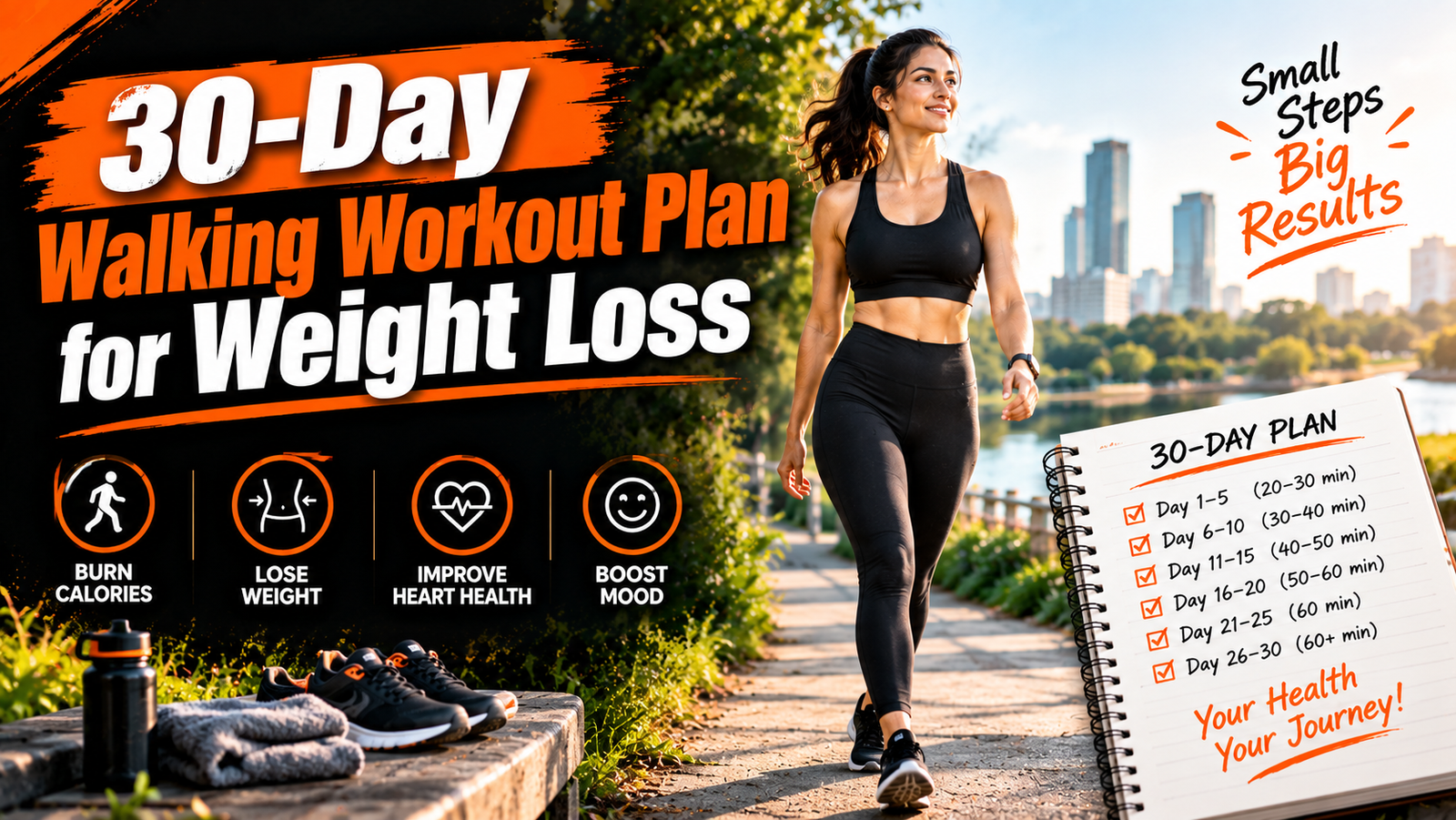
30-Day Walking Workout Plan for Weight Loss
Walking is one of the simplest ways to become more physically active. You do not need a gym membership, expensive equipment, or advanced exercise skills to get started.
A 30-day walking workout plan for weight loss can give you a structured way to increase your daily activity, build consistency, and gradually improve your walking fitness.
For beginners, walking can be particularly practical because you can adjust the duration and intensity according to your current fitness level. You can walk outdoors, on a treadmill, in a park, or even around your home when necessary.
However, walking alone does not guarantee weight loss. Changes in body weight are influenced by overall energy intake, physical activity, sleep, individual factors, and other lifestyle habits.
The goal of this 30-day plan is to help you develop a sustainable walking routine rather than chase unrealistic results in a short period.
All Tools
- BMI calculator
- Calorie calculator
- Macro calculator
- Protein calculator
- Body fat calculator
- Water calculator
- Calorie burn calculator
What Is a 30-Day Walking Workout Plan?
A 30-day walking workout plan is a structured schedule that gradually builds your walking activity over four weeks.
Instead of trying to walk for a long time from the first day, you start at a manageable level and progressively introduce longer walks, brisk intervals, recovery days, and changes in intensity.
A typical plan can include:
- All Tools
- Easy walking
- Brisk walking
- Short walking intervals
- Longer steady walks
- Recovery walks
- Rest days
- Gradual increases in walking duration
The exact amount of walking you need depends on your current fitness level and daily routine.
Why Choose Walking for Weight Loss?
Walking is accessible to many people and can be incorporated into everyday life.
You can walk:
- Before or after work
- During a lunch break
- In the morning or evening
- While doing errands
- On a treadmill
- In a local park
- Around your neighborhood
The biggest advantage is consistency.
A workout routine that you can realistically follow several days per week is often more useful than an intense program that you abandon after a few days.
Can Walking Help With Weight Loss?
Yes, walking can contribute to weight loss because physical activity increases energy expenditure.
However, the amount of weight someone loses depends on several factors, including food intake, activity level, body size, walking intensity, sleep, and individual metabolism.
Walking can support weight management by increasing daily movement and helping you create a sustainable exercise habit.
It can also be combined with other forms of physical activity, such as strength training, cycling, swimming, or other activities you enjoy.
Walking and Calorie Burn
The number of calories burned during a walk varies from person to person.
Factors include:
- Body weight
- Walking speed
- Walking duration
- Terrain
- Incline
- Fitness level
- Individual physiology
For this reason, calorie estimates from fitness watches and online calculators should be treated as estimates rather than exact measurements.
Instead of focusing entirely on calories burned during each walk, use your walking routine to build regular physical activity into your lifestyle.
How Much Should You Walk Each Day?
There is no single daily walking distance that guarantees weight loss.
Some people may begin with 15–20 minutes per day, while others may comfortably walk for 45–60 minutes.
If you are currently inactive, starting with a shorter duration can make the routine easier to maintain.
A useful progression is:
Start manageable → build consistency → increase duration → introduce brisk intervals.
You do not need to reach a specific step count immediately.
Walking Duration for Beginners
If you are new to exercise, you might begin with:
- 15–20 minutes of easy walking
- 5 days per week
- Comfortable pace
- At least one or two easier recovery days
As your fitness improves, you can gradually increase your walking duration.
If 20 minutes feels easy, you might progress toward 25–30 minutes. Later, you can introduce short periods of brisk walking.
Understanding Walking Intensity
Walking at different speeds produces different training demands.
You do not have to walk quickly during every session. Easy walking has a useful role, particularly during recovery days.
Easy Walking
During an easy walk:
- You can comfortably hold a conversation.
- Your breathing is relatively relaxed.
- The pace feels sustainable.
- You are not trying to maximize intensity.
Easy walking is useful for beginners and recovery sessions.
Brisk Walking
Brisk walking is faster than a casual stroll.
A practical way to judge intensity is the talk test.
During moderate-intensity activity, you should generally be able to talk but may find it difficult to sing comfortably.
Your exact walking speed will depend on your fitness level.
Walking Intervals
Walking intervals alternate between different intensities.
For example:
- 3 minutes easy
- 2 minutes brisk
- Repeat several times
Intervals can make walking more engaging and provide periods of higher effort without requiring you to walk briskly for the entire session.
30-Day Walking Workout Plan Overview
The following plan is designed as a general starting point for adults who can walk comfortably and do not have restrictions that make exercise unsafe.
The program gradually increases walking activity across four weeks.
| Week | Main Focus | Typical Session |
|---|---|---|
| Week 1 | Build the habit | Easy to moderate walking |
| Week 2 | Increase duration | Longer walks + short brisk periods |
| Week 3 | Add intervals | Easy and brisk walking intervals |
| Week 4 | Build endurance | Longer walks + structured intervals |
You can modify the plan if the suggested duration is too difficult.
Progress should be gradual rather than forced.
Week 1: Build Your Walking Habit
The first week is about consistency.
You are not trying to walk as fast or as far as possible. The priority is simply getting comfortable with regular walking.
Day 1: 20-Minute Easy Walk
Start with a comfortable 20-minute walk.
Keep the pace relaxed and focus on getting used to the routine.
Workout:
- 5 minutes easy
- 10 minutes comfortable walking
- 5 minutes easy
Day 2: 20-Minute Walk
Repeat a 20-minute walk.
If you feel comfortable, make the middle portion slightly faster than Day 1.
Workout:
- 5 minutes easy
- 10 minutes moderate
- 5 minutes easy
Day 3: Recovery Walk
Take a shorter 15-minute easy walk.
The purpose is to stay active without making the session demanding.
Workout:
- 15 minutes easy walking
If you feel unusually tired or sore, you can take a rest day instead.
Day 4: 25-Minute Walk
Increase the duration slightly.
Workout:
- 5 minutes easy
- 15 minutes comfortable pace
- 5 minutes easy
Focus on maintaining a steady rhythm.
Day 5: Brisk Walking Introduction
Introduce short brisk periods.
Workout:
- 5 minutes easy
- 2 minutes brisk
- 3 minutes easy
- 2 minutes brisk
- 3 minutes easy
- 5 minutes comfortable
The brisk periods should feel more challenging than your normal pace but should not leave you struggling to breathe.
Day 6: 30-Minute Easy-to-Moderate Walk
Take a slightly longer walk.
Workout:
- 5 minutes easy
- 20 minutes comfortable
- 5 minutes easy
If 30 minutes is too much, reduce the duration.
Day 7: Rest or Gentle Walk
Use this day for recovery.
You can take a gentle 10–15 minute walk if you feel good, but there is no need to make it a workout.
Week 1 Goal
By the end of Week 1, the main goal is to establish a consistent walking routine.
You should not worry about maximizing calorie burn.
Focus on:
- Showing up consistently
- Finding a comfortable walking pace
- Wearing suitable footwear
- Paying attention to how your body feels
- Creating a routine that fits your schedule
Week 2: Increase Walking Duration
During Week 2, the goal is to gradually increase your total walking time.
You will continue using easy walking while adding a few more brisk periods.
Day 8: 30-Minute Walk
Workout:
- 5 minutes easy
- 20 minutes moderate
- 5 minutes easy
Day 9: Brisk Walking Intervals
Workout:
- 5 minutes easy
- 3 minutes brisk
- 3 minutes easy
- 3 minutes brisk
- 3 minutes easy
- 3 minutes brisk
- 5 minutes easy
Day 10: Recovery Walk
Take a relaxed 20-minute walk.
Do not worry about speed.
Day 11: 35-Minute Walk
Workout:
- 5 minutes easy
- 25 minutes comfortable to moderate
- 5 minutes easy
Day 12: Short Interval Session
Workout:
- 5 minutes easy
- 5 rounds of:
- 2 minutes brisk
- 2 minutes easy
- 5 minutes easy
Day 13: Longer Steady Walk
Walk for approximately 35–40 minutes at a comfortable pace.
You should finish feeling like you could have continued for a little longer.
Day 14: Rest or Gentle Walk
Use the day for recovery.
A gentle walk is optional.
Week 2 Goal
By the end of Week 2, you should be becoming more comfortable with longer walking sessions.
The focus is still consistency rather than maximum intensity.
How to Make Walking More Effective for Weight Loss
Walking is only one part of a weight-management strategy.
To support your progress, consider these habits:
1. Walk Consistently
A regular walking schedule is more sustainable than occasional long walks.
Try to establish a predictable time for walking.
2. Gradually Increase Intensity
Once comfortable with your normal pace, introduce short brisk intervals.
You do not need to make every walk intense.
3. Pay Attention to Food Intake
Walking increases physical activity, but food intake also affects overall energy balance.
Focus on balanced meals containing:
- Vegetables and fruit
- Protein-rich foods
- Whole grains or other carbohydrate sources
- Healthy fats
- Adequate fluids
Avoid assuming that you can compensate for frequent high-calorie foods simply by walking more.
4. Prioritize Sleep
Sleep is an important part of overall health and recovery.
A consistent sleep schedule can make it easier to maintain healthy lifestyle habits.
5. Track Progress Beyond the Scale
Body weight can fluctuate from day to day.
You can also track:
- Walking duration
- Distance
- Walking pace
- Number of weekly sessions
- Energy levels
- How your clothes fit
- Fitness improvements
This gives you a broader picture of your progress.
30-Day Walking Workout Plan for Weight Loss — Part 2
Week 3: Add Brisk-Walking Intervals
By Week 3, your body should be more comfortable with regular walking. This is a good time to introduce slightly more structured intervals.
The purpose is not to walk as fast as possible. Instead, alternate between comfortable walking and periods of brisk walking that raise your breathing rate.
If the planned duration feels too difficult, reduce the time or return to an easier pace.
Day 15: 35-Minute Steady Walk
Start the week with a comfortable steady walk.
Workout:
- 5 minutes easy
- 25 minutes moderate
- 5 minutes easy
Try to maintain a consistent rhythm rather than frequently changing speed.
Day 16: Brisk-Walking Intervals
Workout:
- 5 minutes easy
- 3 minutes brisk
- 2 minutes easy
- Repeat 4 times
- 5 minutes easy
The brisk periods should feel noticeably faster than your normal walking pace.
Day 17: Recovery Walk
Take a relaxed 20–25 minute walk.
Keep the intensity low.
This session is about maintaining movement while allowing your body to recover from the previous day's intervals.
Day 18: 40-Minute Walk
Workout:
- 5 minutes easy
- 30 minutes comfortable to moderate
- 5 minutes easy
If 40 minutes feels excessive, complete 30–35 minutes instead.
Day 19: Short Brisk Intervals
Workout:
- 5 minutes easy
- 2 minutes brisk
- 2 minutes easy
- Repeat 6 times
- 5 minutes easy
Keep your posture relaxed and avoid turning the brisk intervals into a sprint.
Day 20: Longer Walk
Take a 40–45 minute walk at a comfortable pace.
You should be able to maintain the session without feeling exhausted.
If needed, split the workout into two shorter walks during the day.
Day 21: Rest Day
Take a full rest day or perform gentle everyday movement.
A short, easy walk is optional if you feel comfortable.
Week 3 Goal
The goal of Week 3 is to become comfortable with changes in walking intensity.
By the end of the week, you should have experience with:
- Longer walks
- Brisk intervals
- Recovery walking
- Maintaining a consistent pace
- Adjusting your workout based on how you feel
Week 4: Build Walking Endurance
The final week combines longer walks with structured intervals.
The goal is not to finish the month exhausted. It is to finish with a walking routine that you can continue beyond Day 30.
Day 22: 40-Minute Walk
Workout:
- 5 minutes easy
- 30 minutes moderate
- 5 minutes easy
Keep the pace sustainable.
Day 23: Brisk-Walking Intervals
Workout:
- 5 minutes easy
- 4 minutes brisk
- 2 minutes easy
- Repeat 4 times
- 5 minutes easy
If four-minute brisk intervals are too difficult, reduce them to two or three minutes.
Day 24: Recovery Walk
Walk for 20–25 minutes at an easy pace.
This should feel noticeably easier than Day 23.
Day 25: 45-Minute Steady Walk
Workout:
- 5 minutes easy
- 35 minutes comfortable to moderate
- 5 minutes easy
You can divide the walk into two sessions if completing 45 minutes at once is inconvenient.
Day 26: Interval Walking Workout
Workout:
- 5 minutes easy
- 3 minutes brisk
- 2 minutes easy
- Repeat 5 times
- 5 minutes easy
Focus on maintaining good walking form throughout the session.
Day 27: Longer Comfortable Walk
Walk for approximately 45–50 minutes at an easy-to-moderate pace.
This should be an endurance-focused session rather than a speed workout.
Day 28: Recovery Day
Rest or take a gentle 15–20 minute walk.
Listen to your body and avoid adding intensity simply because it is the final week.
Day 29: Final Structured Walking Workout
Workout:
- 5 minutes easy
- 5 minutes brisk
- 3 minutes easy
- 5 minutes brisk
- 3 minutes easy
- 5 minutes brisk
- 5 minutes easy
This gives you several sustained brisk periods without requiring continuous high-intensity walking.
Day 30: Finish With a Comfortable Longer Walk
Complete a 45–60 minute walk at a pace you can comfortably sustain.
There is no need to make this your fastest walk of the month.
Use the session to reflect on how your walking ability has changed since Day 1.
Week 4 Goal
The final week is about building confidence and creating a routine you can continue after the 30-day challenge.
By Day 30, you should have experience with:
- Regular walking
- Longer sessions
- Brisk intervals
- Recovery days
- Adjusting exercise intensity
- Building physical activity into your schedule
Complete 30-Day Walking Workout Plan at a Glance
| Day | Workout | Approx. Duration |
|---|---|---|
| 1 | Easy walk | 20 min |
| 2 | Easy/moderate walk | 20 min |
| 3 | Recovery walk | 15 min |
| 4 | Comfortable walk | 25 min |
| 5 | Short brisk intervals | 20 min |
| 6 | Easy/moderate walk | 30 min |
| 7 | Rest or gentle walk | Optional |
| 8 | Moderate walk | 30 min |
| 9 | Brisk intervals | 25–30 min |
| 10 | Recovery walk | 20 min |
| 11 | Comfortable walk | 35 min |
| 12 | Short intervals | 30 min |
| 13 | Longer steady walk | 35–40 min |
| 14 | Rest or gentle walk | Optional |
| 15 | Steady walk | 35 min |
| 16 | Brisk intervals | 35 min |
| 17 | Recovery walk | 20–25 min |
| 18 | Moderate walk | 40 min |
| 19 | Brisk intervals | 30–35 min |
| 20 | Longer walk | 40–45 min |
| 21 | Rest | — |
| 22 | Moderate walk | 40 min |
| 23 | Brisk intervals | 38 min |
| 24 | Recovery walk | 20–25 min |
| 25 | Steady walk | 45 min |
| 26 | Brisk intervals | 40 min |
| 27 | Longer walk | 45–50 min |
| 28 | Recovery/rest | 15–20 min optional |
| 29 | Structured intervals | 31 min |
| 30 | Comfortable longer walk | 45–60 min |
The durations are flexible. If you are a complete beginner, have been inactive for a long period, or find a session difficult, reduce the duration or repeat an easier day.
Should You Walk 10,000 Steps a Day for Weight Loss?
The idea of walking 10,000 steps every day is popular, but 10,000 steps is not a universal requirement for weight loss.
Your activity needs depend on your current fitness, daily routine, health, and overall goals.
Instead of suddenly trying to reach 10,000 steps, gradually increase your movement from your current baseline.
For example, if you currently average around 4,000 steps, trying to immediately reach 10,000 every day may be unnecessarily difficult.
A more practical approach could be:
Current activity → small increase → consistency → gradual progression.
Your walking workout can also be separate from your normal daily movement.
For example, you might complete a 30-minute brisk walk while also accumulating steps through work, household activities, and errands.
How to Use a Step Counter
A smartphone, fitness tracker, or smartwatch can help you monitor daily movement.
However, step counts should be viewed as a tracking tool rather than a pass-or-fail target.
You can monitor:
- Average daily steps
- Walking duration
- Number of walking sessions
- Distance
- Changes in walking pace
Looking at weekly averages can be more useful than worrying about a single day's number.
Walking Technique: How to Walk More Comfortably
Good walking technique can make your sessions feel more comfortable.
You do not need an exaggerated fitness-walking style.
Focus on natural movement.
1. Keep Your Head Comfortable
Look ahead rather than constantly looking down at your feet.
This can help you maintain a more natural posture.
2. Relax Your Shoulders
Avoid deliberately holding your shoulders rigid or raising them toward your ears.
Let your arms move naturally.
3. Keep Your Arms Moving Naturally
Your arms can swing gently in coordination with your steps.
There is no need to force a large arm swing.
4. Take Comfortable Steps
Avoid deliberately taking extremely long steps.
A comfortable stride can help you maintain a steady rhythm.
5. Increase Speed Gradually
If you want to walk faster, gradually increase your cadence and maintain a comfortable stride instead of suddenly lengthening your steps.
Outdoor Walking vs. Treadmill Walking
Both outdoor and treadmill walking can be useful.
The better choice is usually the option you can perform consistently and safely.
| Feature | Outdoor Walking | Treadmill Walking |
|---|---|---|
| Environment | Parks, roads, walking paths | Indoor |
| Weather | Can affect routine | Less affected |
| Terrain | May vary | Usually predictable |
| Pace control | Self-controlled | Easy to adjust |
| Convenience | Depends on location | Convenient at home/gym |
| Variety | Natural surroundings | Speed/incline options |
Benefits of Outdoor Walking
Outdoor walking can provide variety through different routes, surfaces, and surroundings.
You can walk in a park, around your neighborhood, or on designated walking paths.
Choose safe, well-maintained areas where possible.
Benefits of Treadmill Walking
A treadmill can be useful when:
- The weather is unsuitable.
- You prefer exercising indoors.
- You want precise control over walking speed.
- You want to exercise at home or in a gym.
You can also adjust the incline when appropriate, but beginners should not feel pressured to use a steep incline.
How to Make Your Walking Workout More Effective
You can make gradual changes to your walking routine without turning every session into a high-intensity workout.
Increase Duration
Once a walking duration feels comfortable, add a few minutes to selected sessions.
Avoid increasing everything at once.
Add Brisk Intervals
Short periods of brisk walking can make a session more challenging.
For example:
2 minutes brisk + 3 minutes easy × 5 rounds
As your fitness improves, you can gradually make the brisk periods longer.
Choose a Route With Gentle Inclines
Walking on a gentle incline can increase the physical challenge.
If you are using a treadmill, start with a comfortable incline rather than immediately choosing a steep setting.
Add Strength Training
Walking is useful for cardiovascular activity, but strength training can complement your routine.
A simple strength-training program can include exercises such as:
- Squats or sit-to-stand movements
- Lunges, if appropriate
- Wall or incline push-ups
- Resistance-band rows
- Hip bridges
- Calf raises
Strength training can help improve muscular fitness and can complement an overall weight-management program.
Common Walking Mistakes That Can Slow Your Progress
Mistake 1: Walking Too Much Too Soon
Increasing walking duration or intensity rapidly can leave you excessively tired or sore.
Better approach: Progress gradually.
Mistake 2: Making Every Walk Fast
You do not need to walk briskly every day.
Better approach: Mix easy, moderate, brisk, and recovery sessions.
Mistake 3: Focusing Only on Step Count
A high step count does not automatically mean you will lose weight.
Better approach: Consider your overall activity, nutrition, recovery, and consistency.
Mistake 4: Ignoring Pain
Normal exercise effort is different from sharp, severe, or persistent pain.
Better approach: Stop an activity that causes significant pain and seek appropriate medical advice if symptoms persist or are concerning.
Mistake 5: Wearing Unsuitable Footwear
Uncomfortable footwear can make walking unnecessarily difficult.
Better approach: Choose comfortable shoes that fit properly and are appropriate for your walking environment.
Mistake 6: Expecting Major Results in 30 Days
A 30-day challenge is a starting point, not a guarantee of a specific amount of weight loss.
Better approach: Focus on developing habits that you can continue after Day 30.
How to Track Your 30-Day Walking Progress
Tracking can make your progress easier to understand.
Create a simple walking log with:
| Date | Duration | Distance/Steps | Intensity | How You Felt |
|---|---|---|---|---|
| Day 1 | 20 min | — | Easy | Comfortable |
| Day 2 | 20 min | — | Moderate | Good |
| Day 3 | 15 min | — | Easy | Easy |
| ... | ... | ... | ... | ... |
| Day 30 | 45–60 min | — | Moderate | Record |
You can use a notebook, phone, spreadsheet, or fitness app.
What Should You Measure?
You do not need to track everything.
Choose a few measurements that are useful to you:
- Walking time
- Number of sessions
- Average steps
- Distance
- Pace
- Body-weight trend
- Waist measurement, if appropriate
- Energy and fitness levels
Remember that body weight naturally fluctuates. Looking at trends over several weeks is generally more informative than reacting to daily changes.
What to Eat While Following a Walking Plan for Weight Loss
There is no special food that is required for walking-based weight loss.
Instead, focus on an overall balanced eating pattern.
For an Indian diet, meals can include:
Breakfast
- Vegetable poha with curd
- Oats with milk and fruit
- Eggs with whole-wheat roti
- Moong dal chilla with curd
Lunch
- Dal with rice and vegetables
- Roti with paneer and salad
- Rajma with rice and vegetables
- Chicken with roti and vegetables
Snacks
- Fruit
- Roasted chana
- Plain curd
- Buttermilk
- A moderate portion of nuts
Dinner
- Dal with roti and vegetables
- Paneer with roti and salad
- Grilled fish with vegetables and rice
- Chicken with vegetables and roti
The appropriate portion sizes depend on your individual energy needs and goals.
Stay Hydrated
Water is generally a practical choice for hydration.
Your fluid needs can increase with exercise, hot weather, and sweating.
In India's warmer climate, pay particular attention to hydration during outdoor walks.
Carry water when appropriate, especially for longer walks or when walking in hot conditions.
When Should You Walk for Weight Loss?
There is no single time of day that guarantees greater weight loss.
The best time is often the time you can consistently maintain.
You might prefer:
- Morning walks
- Evening walks
- Walking after meals
- Lunch-break walks
- Split walks throughout the day
Morning Walking
Morning walks can work well if you enjoy exercising before your day becomes busy.
Evening Walking
Evening walks can be convenient for people who have work or family commitments during the morning.
Walking After Meals
A gentle walk after a meal can be an easy way to add movement to your day.
Keep the intensity comfortable, particularly if walking soon after eating.
The most important factor is consistency.
Who Should Modify This 30-Day Walking Plan?
This plan is a general fitness guide, not a personalized medical exercise prescription.
You may need to modify it if you:
- Have been inactive for a long period.
- Have an existing injury.
- Have a chronic health condition.
- Experience significant joint pain.
- Become unusually short of breath during activity.
- Have balance problems.
- Are pregnant or recently gave birth.
- Have been advised by a healthcare professional to restrict exercise.
If you have concerns about whether walking is appropriate for you, speak with a qualified healthcare professional before starting.
During exercise, stop and seek appropriate medical attention for serious symptoms such as chest pain, fainting, severe shortness of breath, or other symptoms that concern you.
What to Do After the 30-Day Walking Challenge
Completing 30 days is not the end of the process.
It is an opportunity to create a long-term routine.
After Day 30, you can:
Option 1: Repeat the Program
If the schedule worked well for you, repeat it while making small adjustments.
Option 2: Maintain 4–5 Walking Sessions Per Week
Choose a combination of:
- Easy walks
- Brisk walks
- Longer weekend walks
- Recovery walks
Option 3: Progress Gradually
You can increase walking duration or introduce additional strength-training sessions.
Avoid increasing duration and intensity dramatically at the same time.
Option 4: Combine Walking With Strength Training
For a more complete fitness routine, combine regular walking with two or more days of muscle-strengthening activity when appropriate.
The long-term objective is not simply completing a 30-day challenge.
The real goal is turning regular movement into a sustainable part of your lifestyle.
Conclusion
A 30-day walking workout plan for weight loss can be a practical way to build a consistent exercise routine without needing complicated equipment or an expensive gym membership.
The key is to focus on gradual progress rather than trying to walk as much as possible from the first day. Start at a comfortable level, increase your walking time or intensity gradually, and include easier recovery days when needed.
Brisk walking, short walking intervals, longer walks, and consistent daily movement can make the plan more engaging and challenging. However, walking alone does not guarantee weight loss. Your results also depend on food intake, sleep, stress, daily activity, individual metabolism, and how consistently you follow the plan.
If your goal is to lose weight, focus on habits you can maintain beyond these 30 days. A sustainable walking routine is generally more useful than a short-term approach that leaves you exhausted or discouraged.
After completing the 30-day plan, you can continue walking regularly, gradually increase your walking duration, add hills or intervals, and include strength training a few times per week if appropriate for your fitness level.
The goal is not simply to finish 30 days. The goal is to turn walking into a long-term healthy habit.
Key Takeaways
- A 30-day walking workout plan can help beginners create a consistent exercise routine.
- Start with a manageable amount of walking and gradually increase duration or intensity.
- Brisk walking can make a session more challenging than a comfortable-paced walk.
- Walking intervals can add variety without requiring a complicated workout.
- You do not need to reach 10,000 steps every day to benefit from walking.
- Weight-loss results vary from person to person and are influenced by overall diet and activity.
- Avoid increasing walking volume too quickly, especially if you are new to exercise.
- Comfortable footwear, hydration, recovery, and good walking technique matter.
- Track progress using walking time, distance, consistency, energy levels, and other useful measures rather than focusing only on the scale.
- After 30 days, continue the habit instead of stopping suddenly.
A Simple Way to Continue After Day 30
Once you finish the 30-day walking workout plan for weight loss, choose a routine that fits your schedule.
For example, you could use this weekly structure:
| Day | Activity |
|---|---|
| Monday | 30–45 minute brisk walk |
| Tuesday | Easy walk + optional strength training |
| Wednesday | Walking intervals |
| Thursday | Recovery or easy walk |
| Friday | 30–45 minute brisk walk |
| Saturday | Longer comfortable walk |
| Sunday | Rest or gentle movement |
You can adjust the duration and intensity based on your fitness level.
If walking has become easier, gradually increase the challenge rather than making a sudden large jump in duration. Adding short brisk intervals, gentle inclines, or strength exercises can help keep your routine progressive.
CTA: Start Your 30-Day Walking Journey
Ready to make walking part of your routine?
Start with Day 1 of this 30-day walking workout plan for weight loss and focus on consistency rather than perfection. Keep track of your walking sessions, make sensible food choices, stay hydrated, and give your body enough time to recover.
[Business/Offer CTA: Add your business, fitness program, coaching service, walking challenge, app, or product here.]
CTA example: “Want a more personalized approach to your fitness goals? [Book a consultation / Join our fitness program / Download our walking plan] and get practical guidance designed around your routine.”
Frequently Asked Questions
1. Can walking for 30 days help with weight loss?
Walking for 30 days can contribute to weight loss by increasing physical activity and energy expenditure. However, weight-loss results vary between individuals and also depend on food intake, daily activity, sleep, and other factors. There is no guaranteed amount of weight you will lose in 30 days.
2. How long should I walk each day to lose weight?
There is no single walking duration that works for everyone. Beginners can start with shorter sessions and gradually build toward longer walks. A 30–60 minute walk can be a practical target for many people, but your appropriate duration depends on your current fitness level and overall activity.
3. Is 30 minutes of walking enough for weight loss?
A 30-minute walk can be a useful part of a weight-loss routine, particularly when performed consistently. You can gradually increase the duration or include brisk intervals as your fitness improves. Your overall eating pattern and daily activity also influence weight-loss results.
4. How many steps should I walk a day to lose weight?
There is no universal step count required for weight loss. The commonly mentioned 10,000-step target is not a requirement for everyone. A better approach is to establish a realistic baseline and gradually increase your daily movement as your fitness and schedule allow.
5. Is brisk walking better than slow walking for weight loss?
Brisk walking generally requires more effort than slow walking and can increase the intensity of your workout. However, comfortable walking is still useful, particularly for beginners and recovery days. A combination of comfortable and brisk walking can make a routine easier to maintain.
6. Can I lose weight by walking without changing my diet?
Walking can increase physical activity, but weight loss is influenced by overall energy balance. If increased activity is consistently offset by higher food or calorie intake, weight loss may be limited. Sustainable improvements to both physical activity and eating habits can be more effective than relying on walking alone.
7. What should I eat while following a walking plan?
Focus on a balanced eating pattern that includes vegetables, fruits, whole grains or other high-fibre carbohydrate sources, protein-rich foods, and appropriate portions. Indian options can include dal, beans, curd, eggs, paneer, vegetables, roti, rice, fruit, and nuts. Portion needs vary depending on your individual goals and activity level.
8. Is it better to walk in the morning or evening?
The best time to walk is generally the time you can follow consistently and safely. Some people prefer morning walks, while others find evening walks easier to fit into their schedules. Consistency is more important than choosing a particular time of day.
9. Can beginners follow a 30-day walking workout plan?
Yes. A beginner can use a 30-day walking plan if the starting level is appropriate. Begin with comfortable sessions, increase activity gradually, and use recovery days when necessary. If you have a medical condition, significant joint problems, or concerns about starting exercise, consider speaking with a qualified healthcare professional first.
10. What should I do after completing the 30-day walking plan?
Continue walking rather than stopping after Day 30. You can maintain your current routine, gradually increase walking duration or intensity, add hills or intervals, or combine walking with strength training. Choose a sustainable weekly schedule that fits your lifestyle and fitness level.
Final Thought
A walking routine does not need to be complicated to be valuable. The most important step is to create a routine you can realistically continue.
Use this 30-day walking workout plan for weight loss as a starting point, listen to your body, make gradual improvements, and focus on building habits that can last well beyond the first month.
Stop reading, start moving
Reading about training is the easy part. Fifteen minutes today beats a fortnight of research - and all of it is free.
Start Free