Biceps Curl Variations: Which Exercise Is Best?
Compare the best biceps curl variations, learn which muscles they target, and discover how to choose the right exercises for bigger, stronger arms.
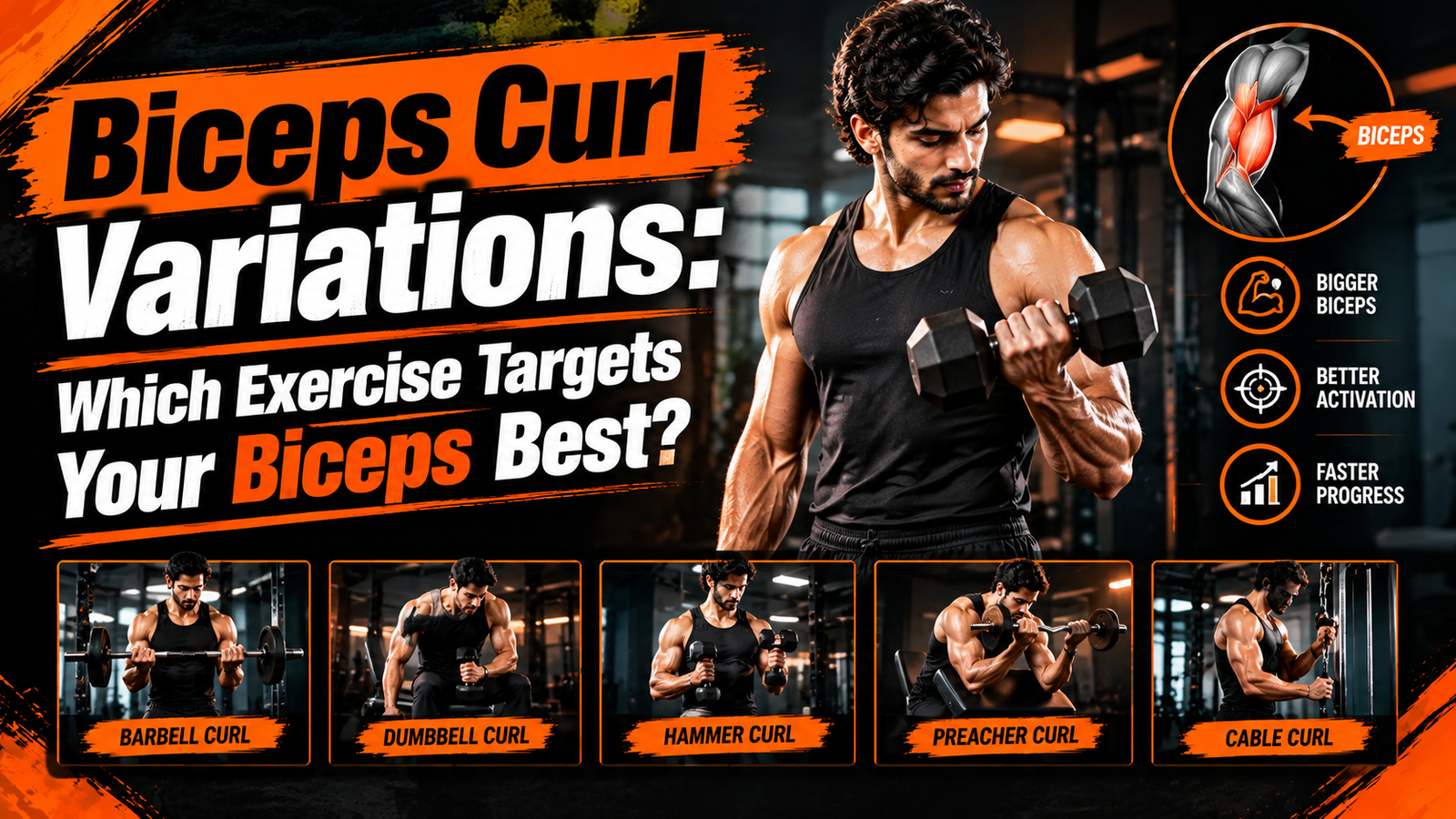
Biceps Curl Variations: Which Exercise Targets Your Biceps Best?
If you want bigger, stronger arms, choosing the right biceps curl variations can make your workout more effective. From classic dumbbell curls to hammer curls and preacher curls, each exercise changes your arm position, grip, or range of motion. These differences can influence how your biceps and other elbow-flexing muscles work.
But which biceps curl is actually the best? Do you need a barbell, an adjustable bench, or an entire collection of gym machines to build your arms?
The good news is that you do not need dozens of exercises. A small selection of well-performed curls, combined with consistent training and gradual increases in difficulty, can help you develop your biceps over time.
In this guide, you will learn what the biceps do, compare popular biceps curl variations, understand which exercises suit different goals, and discover how to build a practical arm-training routine.
All Tools
What Are the Biceps and Why Do They Matter?
The biceps brachii is the prominent muscle on the front of your upper arm. It has two heads: the long head and the short head. Both contribute to bending your elbow and turning your forearm so your palm faces upward, a movement known as supination.
The biceps also work alongside other muscles, including the brachialis and brachioradialis, during curling movements.
Understanding these muscles helps explain why different curl variations can be useful.
1. Biceps brachii
The biceps brachii helps bend your elbow and rotate your forearm. It contributes to the appearance of your upper arm and plays a role in pulling movements.
2. Brachialis
The brachialis sits underneath the biceps brachii and is an important elbow-flexing muscle. Developing it can contribute to overall upper-arm thickness.
Exercises that use a neutral grip, such as hammer curls, involve the brachialis and brachioradialis along with the biceps.
3. Brachioradialis
The brachioradialis is a muscle in the forearm that helps bend the elbow. It is particularly active during many neutral-grip and pronated-grip curling movements.
Why this matters: the best biceps workout does not have to use one exercise exclusively. Combining a conventional curl with a variation that challenges the elbow flexors from a different position can make your programme more balanced.
Why Biceps Curl Variations Matter
Repeating the same curl is not necessarily a problem. In fact, keeping an exercise consistent can make it easier to track progress.
However, different variations offer different practical benefits.
Different arm positions
Some curls place your upper arms beside your torso, while others position them behind or in front of your body. These changes affect shoulder position and the muscles' working lengths.
For example, incline dumbbell curls place your upper arms behind your torso, while preacher curls support your upper arms in front of you.
Neither position automatically makes an exercise superior for everyone. Both can be useful when performed with good technique and a suitable range of motion.
Different grips
Your grip changes how your forearm is positioned and influences the contribution of the muscles involved in elbow flexion.
- Supinated grip: Your palms face upward or rotate upward during the curl.
- Neutral grip: Your palms face one another, as in a hammer curl.
- Pronated grip: Your palms face downward, as in a reverse curl.
A supinated curl directly trains the biceps brachii's elbow-flexion and supination functions. Neutral- and pronated-grip curls can provide additional work for other elbow flexors.
Different equipment options
Dumbbells, barbells, cables, and machines all have a place in arm training.
Dumbbells allow each arm to work independently. Barbells can make it convenient to add weight in small increments, depending on the equipment available. Cables provide resistance through a pulley system, while machines may offer extra stability.
You do not need every type of equipment. Choose options that are comfortable, available, and easy to progress.
The Best Biceps Curl Variations to Know
The following exercises are useful options for building a biceps workout. The best choice depends on your experience, equipment, comfort, and training goals.
1. Standing Dumbbell Curl
The standing dumbbell curl is one of the most accessible biceps curl variations. It allows each arm to move independently and makes it easy to use a supinated grip.
<AsyncImage query="standing dumbbell biceps curl exercise correct form gym fitness demonstration" aspectRatio="5:4" width="100%" />
Main muscles involved: Biceps brachii, brachialis, and other elbow flexors.
How to perform it:
- Stand with your feet about hip-width apart and hold a dumbbell in each hand.
- Begin with your arms extended comfortably beside your body.
- Keep your upper arms relatively still as you bend your elbows.
- Rotate your palms upward as you curl if that movement feels comfortable.
- Lift the dumbbells without swinging your torso.
- Lower the weights under control to the starting position.
Best for: Beginners, general biceps development, and people training at home or in a gym.
Common mistake: Using momentum to lift weights that are too heavy. If your torso repeatedly swings, reduce the load and focus on controlled repetitions.
2. Barbell Curl
The barbell curl is a classic option for people who want to train both arms together. Depending on the bar and your grip, it can also be convenient to increase the weight gradually.
<AsyncImage query="standing straight barbell biceps curl exercise proper form gym" aspectRatio="5:4" width="100%" />
Main muscles involved: Biceps brachii and other elbow flexors.
How to perform it:
- Stand upright and hold the bar with an underhand grip.
- Keep your wrists comfortable and your elbows close to your sides.
- Curl the bar upward by bending your elbows.
- Avoid leaning backward to finish the repetition.
- Lower the bar slowly without dropping the weight.
Best for: Lifters who want a straightforward, measurable curl for progressive overload.
Common mistake: Turning the curl into a whole-body movement. A small amount of natural movement can occur, but excessive swinging reduces control and may increase discomfort.
If a straight bar bothers your wrists, consider a suitable EZ-bar or dumbbell variation instead.
3. Hammer Curl
Hammer curls use a neutral grip, with your palms facing one another. This makes them a useful complement to traditional supinated curls.
<AsyncImage query="standing dumbbell hammer curl neutral grip exercise demonstration" aspectRatio="5:4" width="100%" />
Main muscles involved: Brachialis, brachioradialis, and biceps brachii.
How to perform it:
- Stand upright with a dumbbell in each hand.
- Keep your palms facing one another throughout the movement.
- Bend your elbows and lift the weights without twisting your wrists.
- Keep your shoulders relaxed and avoid swinging.
- Lower the dumbbells slowly.
Best for: Developing the elbow flexors, adding variety to a biceps routine, and training with a neutral grip.
Common mistake: Rotating the wrists or moving the elbows excessively to lift heavier weights.
Hammer curls are not a replacement for every other curl, but they can complement conventional curls by changing the grip and muscular emphasis.
A Quick Comparison of These Three Exercises
| Exercise | Grip | Main practical benefit | Suitable for |
|---|---|---|---|
| Standing dumbbell curl | Supinated or rotating | Independent arm movement | Most training levels |
| Barbell curl | Underhand | Convenient loading and progression | Beginners to advanced lifters |
| Hammer curl | Neutral | Additional emphasis on the brachialis and brachioradialis | Most training levels |
No single variation guarantees the most muscle growth. Consistent effort, appropriate training volume, sound technique, and progression matter more than finding a supposedly perfect curl.
How to Choose Your First Biceps Exercises
If you are just starting, choose one conventional curl and learn to perform it well. Add a second variation when you can maintain good form and recover comfortably between sessions.
For example:
- Beginner with dumbbells: Start with standing dumbbell curls.
- Gym-goer who prefers a bar: Consider barbell or EZ-bar curls.
- Someone who wants a neutral-grip option: Add hammer curls.
- Home trainee with limited equipment: Dumbbell curls and hammer curls may be enough to get started.
You do not need to change exercises every week. Keep a record of your weights and repetitions so you can see whether your performance is improving.
4. Incline Dumbbell Curl
The incline dumbbell curl is a popular exercise for training the biceps with your upper arms positioned behind your torso. This shoulder position lengthens the biceps at the bottom of the movement compared with a typical standing curl.
Training a muscle at longer lengths may be useful for muscle growth, although results depend on the exercise, execution, and overall training programme.
Main muscles involved: Biceps brachii and other elbow flexors.
Equipment needed: Adjustable bench and a pair of dumbbells.
How to perform incline dumbbell curls
- Set an adjustable bench to a comfortable incline.
- Sit back with your feet planted firmly on the floor.
- Let your arms hang naturally beside your torso without forcing your shoulders backward.
- Curl the dumbbells by bending your elbows.
- Keep your shoulders relatively still and avoid swinging the weights.
- Lower the dumbbells under control until your arms return to a comfortable extended position.
Best for: Intermediate lifters and beginners who can control the movement and want another option beyond standing curls.
Common mistake: Using excessive weight and allowing the shoulders to roll forward or the elbows to move significantly during each repetition.
Start with a lighter load than you might use for standing curls. The stretched position can feel challenging, and you should never force a painful range of motion.
5. Preacher Curl
Preacher curls support your upper arms on an angled pad. This helps reduce body swinging and makes it easier to focus on bending the elbows.
You can perform preacher curls with a machine, an EZ-bar, or dumbbells, depending on the equipment available.
Main muscles involved: Biceps brachii and other elbow flexors.
How to perform preacher curls
- Adjust the seat so your upper arms rest comfortably on the pad.
- Hold the bar or dumbbells with a suitable grip.
- Begin with your elbows extended comfortably without forcing them into a locked position.
- Curl the weight upward while keeping your upper arms supported.
- Pause briefly if you can maintain control.
- Lower the weight slowly through a comfortable range of motion.
Best for: People who want a supported curl variation and find it difficult to avoid swinging during standing curls.
Common mistake: Dropping the weight quickly or forcing the elbows into deep extension under a heavy load.
The preacher curl is not automatically better than a standing curl. Its main practical advantage is the supported position, which can help you focus on the target movement.
6. Concentration Curl
The concentration curl is usually performed seated, with the working arm supported against the inner thigh. It is useful when you want to train one arm at a time and pay close attention to your technique.
Main muscles involved: Biceps brachii and other elbow flexors.
How to perform concentration curls
- Sit on a bench with your feet planted firmly.
- Hold a dumbbell in one hand.
- Lean forward slightly and support your upper arm against your inner thigh.
- Curl the dumbbell toward your shoulder without lifting your elbow away from the support.
- Lower the weight slowly.
- Complete your repetitions before switching arms.
Best for: Lifters who prefer unilateral training and want to focus on controlled repetitions.
Common mistake: Twisting your torso or moving the upper arm to help lift the weight.
Concentration curls can be a useful accessory, but they are not essential for everyone. You can build strong biceps without including every popular curl variation.
7. Cable Curl
Cable curls use a pulley system to provide resistance. Depending on the cable attachment and your position, you can perform them with a straight bar, EZ-style attachment, rope, or individual handles.
The resistance profile differs from that of free weights, but the exact challenge depends on the pulley arrangement and your position relative to the machine.
Main muscles involved: Biceps brachii and other elbow flexors.
How to perform standing cable curls
- Attach a suitable handle to a low pulley.
- Stand facing the machine with your feet stable.
- Hold the handle with an underhand grip.
- Keep your upper arms relatively still as you bend your elbows.
- Curl the handle upward without leaning backward.
- Return to the starting position slowly.
Best for: Gym-goers who want a curl variation with adjustable resistance and convenient load changes.
Common mistake: Moving your whole body backward to complete the repetition or allowing the weight stack to pull your arms down uncontrollably.
Cable curls are a practical choice when you have access to a cable machine, but you do not need them to build your biceps.
8. Reverse Curl
Reverse curls use an overhand grip, with your palms facing downward. This changes the contribution of the elbow-flexing muscles and makes the movement a useful option for training the forearms as well as the upper arm.
Main muscles involved: Brachioradialis, brachialis, and other elbow flexors. The biceps brachii also contributes, although the pronated grip changes its mechanical role.
How to perform reverse curls
- Stand upright and hold a bar or pair of dumbbells with your palms facing down.
- Keep your wrists in a comfortable, stable position.
- Bend your elbows to lift the weight.
- Avoid swinging your torso or allowing your wrists to bend excessively.
- Lower the weight under control.
Best for: People who want additional forearm and elbow-flexor work.
Common mistake: Choosing a load that is too heavy and compensating with wrist movement or body momentum.
Reverse curls are not usually the first exercise to choose if your only priority is directly training the biceps brachii. They can, however, complement conventional curls in a broader arm programme.
9. EZ-Bar Curl
The EZ-bar curl is similar to a standard barbell curl, but the angled grip positions may feel more comfortable for some people's wrists.
Main muscles involved: Biceps brachii and other elbow flexors.
How to perform EZ-bar curls
- Hold the EZ-bar using the angled underhand grips.
- Stand with your feet stable and your elbows close to your torso.
- Curl the bar upward without swinging your back.
- Keep your wrists in a comfortable position.
- Lower the bar slowly to the starting position.
Best for: People who prefer a barbell-style curl but find a straight bar uncomfortable.
Common mistake: Assuming that the EZ-bar allows you to use unlimited weight. Choose a load you can control throughout the movement.
Which Biceps Curl Variation Targets the Biceps Best?
There is no single curl that is universally best for everyone. Different exercises change grip, shoulder position, stability, and resistance, which can affect how you perform the movement.
Use the following table as a practical starting point.
| Exercise | Main reason to choose it | Equipment |
|---|---|---|
| Standing dumbbell curl | Versatile, independent arm movement | Dumbbells |
| Barbell curl | Straightforward loading and progression | Barbell |
| Hammer curl | Neutral grip and additional elbow-flexor work | Dumbbells |
| Incline dumbbell curl | Trains the biceps with the upper arms behind the torso | Dumbbells and bench |
| Preacher curl | Supported upper arms and less opportunity to swing | Bench or machine |
| Concentration curl | One-arm training and focused technique | Dumbbell and bench |
| Cable curl | Adjustable resistance using a pulley | Cable machine |
| Reverse curl | Greater emphasis on forearm and brachialis involvement | Bar or dumbbells |
| EZ-bar curl | Bar-based curling with an angled grip | EZ-bar |
A practical recommendation: choose one curl that you can progressively load, then add a second variation that complements it. You do not need all nine exercises in the same workout.
Do Different Curls Target the Long Head and Short Head Differently?
The biceps brachii has a long head and a short head. Both contribute to elbow flexion and supination, and both are involved in many common curling exercises.
You may hear that a particular curl isolates one head completely. That is an oversimplification.
Changing your shoulder position, grip, or exercise setup may influence muscle mechanics and recruitment. However, no standard curl completely isolates one biceps head while switching the other off.
For example:
- Incline curls: Place the upper arms behind the torso and train the biceps in a more lengthened shoulder position.
- Preacher curls: Position the upper arms in front of the torso and provide support during the movement.
- Standing curls: Offer a flexible, general-purpose option.
- Hammer curls: Use a neutral grip that also involves the brachialis and brachioradialis.
- All Tools
- BMI calculator
- Body fat calculator
- One rep max calculator
- 28 Day Abs Starter
- Leg Raises
- Mountain Climbers
For well-rounded development, focus on consistent training and a manageable selection of exercises rather than trying to isolate each head with a separate movement.
How Many Sets and Repetitions Should You Do?
The right number of sets and repetitions depends on your training experience, recovery, exercise selection, and overall weekly programme.
For many people, a useful starting point is to perform curls for 2–4 working sets of approximately 8–15 repetitions per exercise. This is a practical range, not a strict rule. You can build muscle with different repetition ranges when the sets are sufficiently challenging and technique remains sound.
Beginner biceps workout
Try this simple session once or twice per week, depending on your overall training schedule and recovery.
| Exercise | Sets | Repetitions |
|---|---|---|
| Standing dumbbell curl | 3 | 8–12 |
| Hammer curl | 2 | 10–15 |
Rest long enough between sets to maintain good technique. Around 60–120 seconds is a reasonable starting point for many people, with longer rest if needed.
Intermediate biceps workout
If you already train consistently and recover well, you might use a slightly broader selection.
| Exercise | Sets | Repetitions |
|---|---|---|
| EZ-bar curl | 3 | 6–10 |
| Incline dumbbell curl | 3 | 8–12 |
| Hammer curl | 2 | 10–15 |
This is an example of one session, not a requirement to follow exactly. Adjust it based on how much biceps work you already get from rows, pull-ups, pulldowns, and other pulling exercises.
How often should you train your biceps?
Many people train their biceps as part of a pull workout or upper-body session one to three times per week. The best frequency depends on your total training volume and ability to recover.
Remember that pulling exercises also involve the elbow flexors. If your routine already contains a lot of rows and pull-ups, you may need fewer direct curl sets than someone who does little other pulling work.
Start with a manageable amount of training and increase it only when your performance and recovery support doing so.
How to Progress for Bigger Biceps
Muscle growth requires more than changing exercises. You need a training plan that gives your muscles a reason to adapt.
1. Use progressive overload
Progressive overload means gradually increasing the challenge over time. You might do this by adding repetitions, increasing the load slightly, improving control, or performing more work when appropriate.
For example, if you perform dumbbell curls for three sets of eight repetitions with good form, you might gradually work toward three sets of twelve before moving to a slightly heavier dumbbell.
Do not increase the weight if it causes you to swing your body or shorten the movement substantially.
2. Control the lowering phase
Lower the weight with control rather than allowing gravity to do all the work. You do not need to make every repetition extremely slow, but avoid dropping the weight or losing control at the bottom.
3. Use a comfortable range of motion
Bend and extend your elbows through a range that you can control comfortably. Avoid forcing the joint into painful positions.
4. Leave room for recovery
Training to complete failure on every set is not necessary. Many lifters can make progress by finishing most sets with a small number of good repetitions still possible.
If your performance keeps declining, your elbows become persistently uncomfortable, or you feel unusually fatigued, review your workload and recovery.
Common Biceps Curl Mistakes to Avoid
Even a well-chosen exercise may be less useful if you consistently perform it with poor control.
Using too much weight
If you need to swing your torso, shrug your shoulders, or jerk the dumbbells upward, reduce the load.
Moving the elbows excessively
Some elbow movement can occur naturally, but repeatedly bringing your elbows far forward to finish a curl can change the exercise. Choose a weight that lets you maintain a stable upper-arm position.
Dropping the weight too quickly
Control the lowering portion of each repetition. This helps maintain consistent technique and makes the movement easier to standardise.
Training only one curl variation forever
You can make progress with one exercise, but a second variation may be useful if it adds a different grip, position, or training stimulus. Change exercises for a reason, not simply because a new exercise is trending.
Ignoring the rest of your programme
Biceps growth also depends on your overall training, nutrition, sleep, and recovery. Adding more curls will not automatically improve results if your workload is already excessive.
How to Choose the Best Biceps Curl Variations for Your Goals
You now know several biceps curl variations and how they differ. The next step is choosing the exercises that fit your experience, equipment, and training priorities.
You do not need to perform every curl in every workout. In most cases, two or three well-selected exercises are enough for a focused biceps session.
If your goal is bigger biceps
Start with a conventional curl, such as a standing dumbbell curl or EZ-bar curl. Add an incline dumbbell curl if you want to train with your upper arms positioned behind your torso.
Your priorities should be consistent training, controlled technique, sufficient effort, and gradual progression.
If your goal is thicker-looking arms
Consider combining a supinated curl with hammer curls. Hammer curls involve the brachialis, which sits beneath the biceps brachii, and the brachioradialis in the forearm.
Developing these muscles can contribute to overall arm size, although your results will depend on genetics, training history, and the rest of your programme.
If you want to improve exercise control
Preacher curls and concentration curls can help you focus on the curling movement without relying as much on body momentum.
Start with a manageable weight and avoid forcing the bottom position under heavy resistance.
If you train at home
You can build an effective routine with a pair of dumbbells. Standing dumbbell curls and hammer curls are a useful combination for many home trainees.
If you have resistance bands instead, band curls can also provide resistance without requiring a gym membership.
If you train in a gym
You have more options, including barbells, EZ-bars, cable machines, preacher benches, and adjustable benches.
Choose equipment that feels comfortable and allows you to progress. More equipment does not automatically mean better results.
A Simple Weekly Biceps Training Approach
Your biceps already work during many back exercises, including rows, pulldowns, and pull-ups. For that reason, plan direct curls around your complete workout rather than treating the biceps as if they work in isolation all week.
Here is an example of how you might organise your training.
| Day | Training focus | Example biceps work |
|---|---|---|
| Monday | Upper body or pull | EZ-bar curls, 3 sets |
| Tuesday | Lower body | No direct curls required |
| Wednesday | Rest or light activity | Recovery |
| Thursday | Upper body or pull | Hammer curls, 2–3 sets |
| Friday | Lower body or full body | No direct curls required |
| Weekend | Rest or optional activity | Recovery as needed |
This is an example, not a universal prescription. You can also perform all your direct biceps work in one session if that fits your routine.
Beginners may need less direct arm work than experienced lifters. If your back workouts already include several challenging pulling exercises, start with a modest amount of direct curling and adjust based on your progress and recovery.
Nutrition Tips to Support Biceps Growth
Your choice of curl is only one part of building bigger arms. Your diet and recovery also influence how well you respond to training.
1. Eat enough protein
Protein supplies amino acids that help your body repair and build muscle tissue. Include suitable sources throughout the day, such as:
- Eggs, fish, chicken, or lean meat.
- Milk, curd, paneer, and other dairy foods.
- Dal, beans, chickpeas, and other pulses.
- Soybeans, tofu, and other soy-based foods.
- Nuts and seeds as part of a balanced diet.
Vegetarians can build a suitable protein intake using a combination of dairy, soy, pulses, and other protein-rich foods.
2. Eat enough total food
Building muscle can be more difficult if you consistently eat too little. Depending on your goals and starting point, maintaining your current weight or eating a modest calorie surplus may support muscle development.
You do not need to force yourself to eat excessively. Focus on a sustainable diet that meets your energy and nutritional needs.
3. Get sufficient sleep
Sleep supports recovery and helps you maintain consistent training performance. Establish a regular sleep schedule and allow your muscles time to recover between challenging sessions.
4. Be patient and track progress
Visible muscle growth takes time. Track your exercises, weights, repetitions, and training consistency instead of judging your results after only a few workouts.
If you are not progressing, review your technique, training workload, nutrition, and recovery before adding more exercises.
Final Verdict: Which Biceps Curl Is Best?
There is no single best biceps curl for every person. Different variations offer different benefits, and the most useful choice is one you can perform comfortably, control consistently, and progressively challenge.
Here is a simple way to start:
- Best all-round option: Standing dumbbell curl.
- Best bar-based option: EZ-bar curl or barbell curl, depending on comfort.
- Useful neutral-grip option: Hammer curl.
- Useful lengthened-position option: Incline dumbbell curl.
- Useful supported option: Preacher curl.
- Useful single-arm option: Concentration curl.
- Useful cable option: Standing cable curl.
- Useful forearm-focused addition: Reverse curl.
These are practical categories rather than a scientific ranking of muscle-growth effectiveness.
For most people, starting with standing dumbbell curls and hammer curls provides a simple, manageable routine. As you gain experience, you can experiment with incline curls, preacher curls, or cable curls if they suit your goals.
The key is not finding a magical exercise. It is building a routine that you can perform well, recover from, and improve over time.
Ready to build stronger arms? Choose two curl variations, record your sets and repetitions, and follow the same routine long enough to measure progress. Combine your training with balanced nutrition and adequate recovery, and make changes based on results rather than trends.
Frequently Asked Questions About Biceps Curl Variations
1. Which biceps curl variation is best for muscle growth?
Standing dumbbell curls, EZ-bar curls, incline dumbbell curls, and other controlled curl variations can all help develop the biceps. No single exercise is universally best. Choose movements that feel comfortable, allow a suitable range of motion, and can be progressively loaded.
2. Are hammer curls better than regular biceps curls?
Hammer curls are not automatically better than regular curls. Hammer curls use a neutral grip and involve the brachialis and brachioradialis along with the biceps. Conventional supinated curls directly train the biceps' elbow-flexion and supination functions. Using both can provide variety.
3. Which curl variation targets the long head of the biceps?
Incline dumbbell curls place the upper arms behind the torso, changing the shoulder position and length of the biceps. However, they do not isolate the long head completely. Both heads contribute to many common curling movements.
4. Which curl variation targets the short head of the biceps?
No standard curl completely isolates the short head. Preacher curls and other variations change arm position and exercise mechanics, but both heads generally contribute to elbow flexion. Consistent training across a suitable selection of curls is a more useful approach than chasing complete isolation.
5. How many biceps curl variations should I do in one workout?
Many people can start with two exercises, performing around two to four working sets per exercise. You may need more or less depending on your training experience and the amount of biceps work you already get from pulling exercises.
6. How many reps are best for biceps curls?
A range of approximately 8–15 repetitions is a practical starting point for many lifters. Other repetition ranges can also build muscle when sets are sufficiently challenging and technique remains controlled. Adjust the load to suit the planned repetitions.
7. Can I build bigger biceps with dumbbells at home?
Yes. Dumbbell curls and hammer curls can provide an effective starting point for home arm training. Use weights that challenge you while allowing controlled movement, and increase repetitions or load gradually as your strength improves.
8. Are barbell curls better than dumbbell curls?
Neither is universally better. Barbell curls let you train both arms together and can make loading straightforward. Dumbbells allow each arm to work independently and may feel more comfortable for some people. Choose based on comfort, control, equipment, and progression.
9. How often should I train my biceps for growth?
Many people train their biceps directly one to three times per week, depending on their overall programme and recovery. Remember that rows, pull-ups, and pulldowns also involve the elbow flexors. Start with a manageable workload and adjust as needed.
10. Why are my biceps not growing despite doing curls?
Possible reasons include insufficient progressive overload, inconsistent training, inadequate recovery, poor exercise technique, insufficient nutrition, or too little or too much overall training volume. Review your routine over several weeks before making changes. If you experience persistent elbow or shoulder pain, seek advice from a qualified healthcare professional.
Stop reading, start moving
Reading about training is the easy part. Fifteen minutes today beats a fortnight of research - and all of it is free.
Start Free