Dumbbell Workout Plan for Beginners: Train Your Whole Body
Start strength training with this beginner dumbbell workout plan. Learn whole-body exercises, sets, reps, weekly scheduling, and how to choose weights.
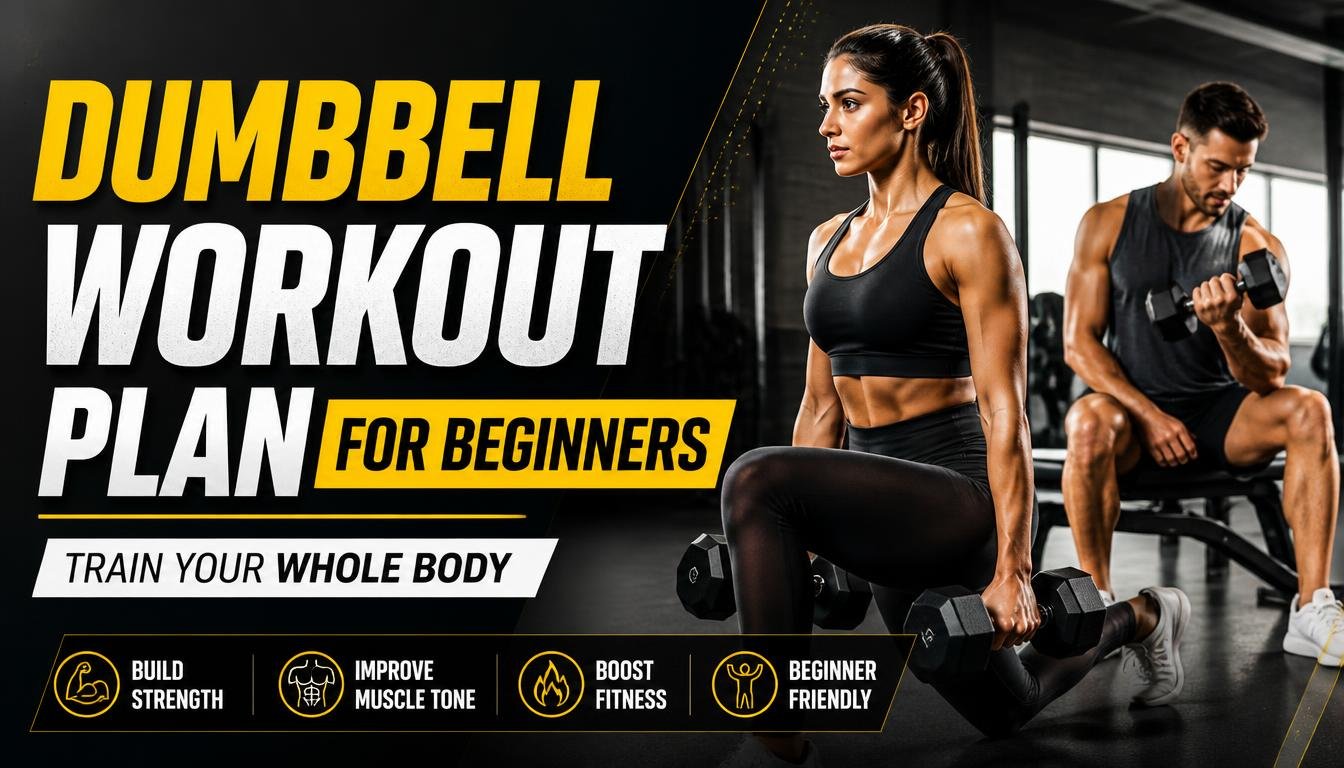
Dumbbell Workout Plan for Beginners: Train Your Whole Body
A pair of dumbbells can be enough to get started with strength training. With a few basic movements, you can train your legs, back, chest, shoulders, arms, and core at home or in a gym.
This dumbbell workout plan for beginners is designed to make your first steps straightforward. You’ll learn which exercises to do, how many sets and repetitions to aim for, how often to train, and how to choose a manageable weight.
You don’t need to lift heavy or complete a long workout to begin. Start with weights you can control, learn the movements, and build up gradually. If you have an injury, a health condition, or uncertainty about whether an exercise is suitable for you, consult a qualified healthcare professional before starting.
Why Use Dumbbells for Beginner Strength Training?
Dumbbells are versatile tools for learning resistance training. They allow you to practice common movement patterns and adjust the challenge by changing the weight, repetitions, or exercise variation.
Train several muscle groups
A full body dumbbell workout can include:
- All Free Tools
- Squats or lunges for the legs and glutes
- Rows for the back and arms
- Presses for the chest and shoulders
- Hip hinges for the glutes and back of the legs
- Core exercises that challenge trunk stability
A balanced plan works more than one area of the body rather than repeating only the exercises you find easiest.
Adjust the difficulty
If an exercise feels too difficult, you can use a lighter dumbbell, reduce the repetitions, or choose a simpler variation. As your control improves, you can gradually increase the challenge.
Practice at home or in a gym
Dumbbells can fit into many workout settings. If you train at home, make sure you have enough clear space to move safely and a stable surface for any exercise that requires sitting or lying down.
How to Choose the Right Dumbbell Weight
The best starting weight is one you can lift with steady control through the planned repetitions. It may be different for each exercise: the weight you use for a squat might not be appropriate for a shoulder press.
Use these practical checks:
- Start lighter than you think you need. You can increase the weight after you learn the movement.
- Keep your technique consistent. If you have to swing, twist, or rush to complete a repetition, the weight may be too heavy.
- Finish with some effort left. As a beginner, avoid forcing repetitions when your form is breaking down.
- Test each exercise separately. A suitable weight for rows may feel too heavy for presses or curls.
If you have adjustable dumbbells, change the load in small steps. If you have fixed-weight dumbbells, choose the closest manageable option and adjust repetitions as needed.
Your Beginner Full Body Dumbbell Workout
This routine covers the major muscle groups with a small number of exercises. Perform the exercises in order, resting between sets as needed.
Workout overview
| Exercise | Sets | Repetitions |
|---|---|---|
| Dumbbell goblet squat | 2 | 8–12 |
| Dumbbell Romanian deadlift | 2 | 8–12 |
| One-arm dumbbell row | 2 | 8–12 per side |
| Dumbbell floor press | 2 | 8–12 |
| Seated or standing dumbbell shoulder press | 2 | 6–10 |
| Dumbbell curl | 1–2 | 10–12 |
| Dead bug or standing core brace | 2 | 6–10 per side |
Rest: Take about 60–120 seconds between sets, or longer if needed to recover and maintain good control. These ranges are starting points, not numbers you must reach regardless of how you feel.
For your first few sessions, you can do one set of each exercise. Once the routine feels familiar and recovery is comfortable, consider moving to two sets.
How to Perform the Exercises
1. Dumbbell goblet squat
The goblet squat trains the thighs and glutes while allowing you to hold one dumbbell close to your body.
How to do it:
- Hold one dumbbell vertically against your chest with both hands.
- Stand with your feet around hip- to shoulder-width apart.
- Bend your knees and hips, lowering to a comfortable depth.
- Keep your feet planted and your torso steady.
- Press through your feet to stand.
Beginner adjustment: Practice a bodyweight squat or squat toward a sturdy chair before adding weight. Use a range of motion that feels comfortable and controlled.
2. Dumbbell Romanian deadlift
The Romanian deadlift trains the glutes and the muscles along the back of the thighs. It also teaches the hip-hinge movement.
How to do it:
- Stand with a dumbbell in each hand, arms relaxed in front of your thighs.
- Keep your knees slightly bent.
- Push your hips back as the dumbbells travel down close to your legs.
- Stop when you feel a comfortable stretch in the back of your thighs or before your back position changes.
- Press through your feet and bring your hips forward to stand.
Keep the weights close to your body and avoid rounding your back to reach lower. Start with light dumbbells—or practice the hip hinge without weights—until the movement feels familiar.
3. One-arm dumbbell row
Rows train the back and involve the muscles of the arms. Use a stable support, such as a sturdy bench, if you need help maintaining your position.
How to do it:
- Place one hand on a stable support and step your feet into a balanced stance.
- Hold a dumbbell in the other hand with your arm extended.
- Pull the dumbbell toward your hip, keeping your torso steady.
- Lower the weight slowly.
- Complete the repetitions, then switch sides.
Avoid twisting your torso or jerking the weight upward. Choose a load that lets you move smoothly.
4. Dumbbell floor press
The floor press trains the chest, shoulders, and triceps. The floor provides a stable surface and limits how far your upper arms travel behind your body.
How to do it:
- Lie on your back with your knees bent and feet on the floor.
- Hold a dumbbell in each hand, with your elbows resting comfortably near the floor.
- Press the weights upward until your arms are extended without forcefully locking your elbows.
- Lower slowly until your upper arms gently touch the floor.
- Repeat with control.
Use light weights while learning the movement. If getting into or out of the starting position feels unsafe, choose a different exercise or ask a qualified trainer for help.
5. Dumbbell shoulder press
The shoulder press trains the shoulders and triceps. It can be performed seated or standing.
How to do it:
- Hold the dumbbells around shoulder height.
- Keep your ribs comfortably stacked over your pelvis and your feet steady.
- Press the weights upward in a controlled path.
- Lower them slowly to the starting position.
Avoid leaning backward to force the weights overhead. If you cannot press without discomfort or losing control, use lighter weights or skip the movement until you can get appropriate guidance.
6. Dumbbell curl
Curls train the biceps and other muscles that bend the elbow.
How to do it:
- Stand tall with a dumbbell in each hand and your arms by your sides.
- Keep your elbows near your torso.
- Bend your elbows to lift the weights.
- Lower slowly without swinging your body.
Use a weight that allows you to keep your shoulders relaxed and your torso steady.
7. Dead bug or standing core brace
A dead bug is a bodyweight core exercise that can complement your dumbbell work. If lying on the floor is uncomfortable, try a gentle standing brace instead.
Dead bug steps:
- Lie on your back with your knees bent and arms reaching upward.
- Gently brace your midsection while breathing normally.
- Slowly lower one arm and the opposite leg only as far as you can without arching your back.
- Return to the starting position and switch sides.
Keep the movement small and controlled. Stop if it causes discomfort.
How Often Should Beginners Train?
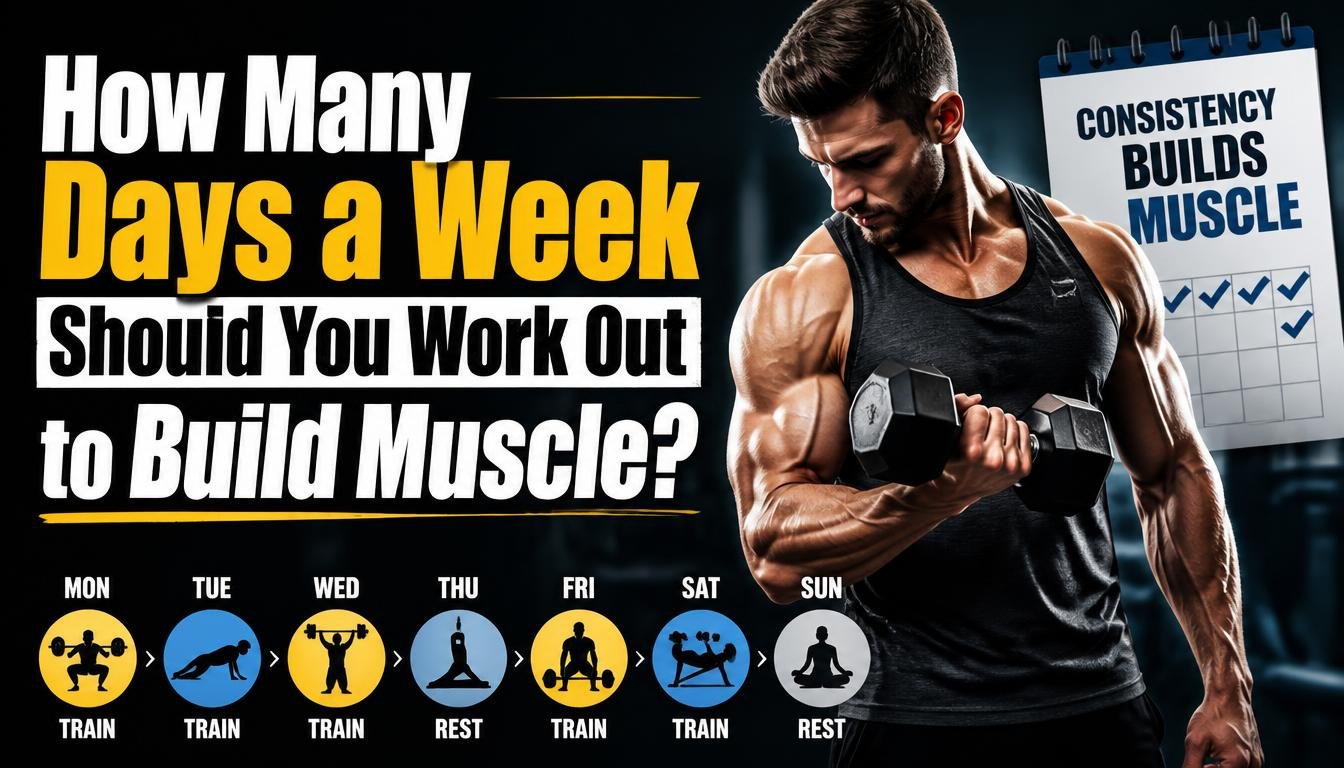
For many beginners, two full body workouts per week is a manageable place to start. If you recover well and want to train more often, you may build toward three sessions per week, with rest or lighter activity between challenging workouts.
Example schedules:
| Frequency | Example |
|---|---|
| 2 days per week | Monday and Thursday |
| 3 days per week | Monday, Wednesday, and Friday |
Use the schedule as a guide, not a rule. If you are very sore, unusually tired, or struggling to maintain technique, take more recovery time or reduce the next workout.
How to Progress Your Dumbbell Workout
Your first goal is to learn the movements and find weights you can control. Once the routine feels manageable, increase the challenge gradually.
Use a simple progression method
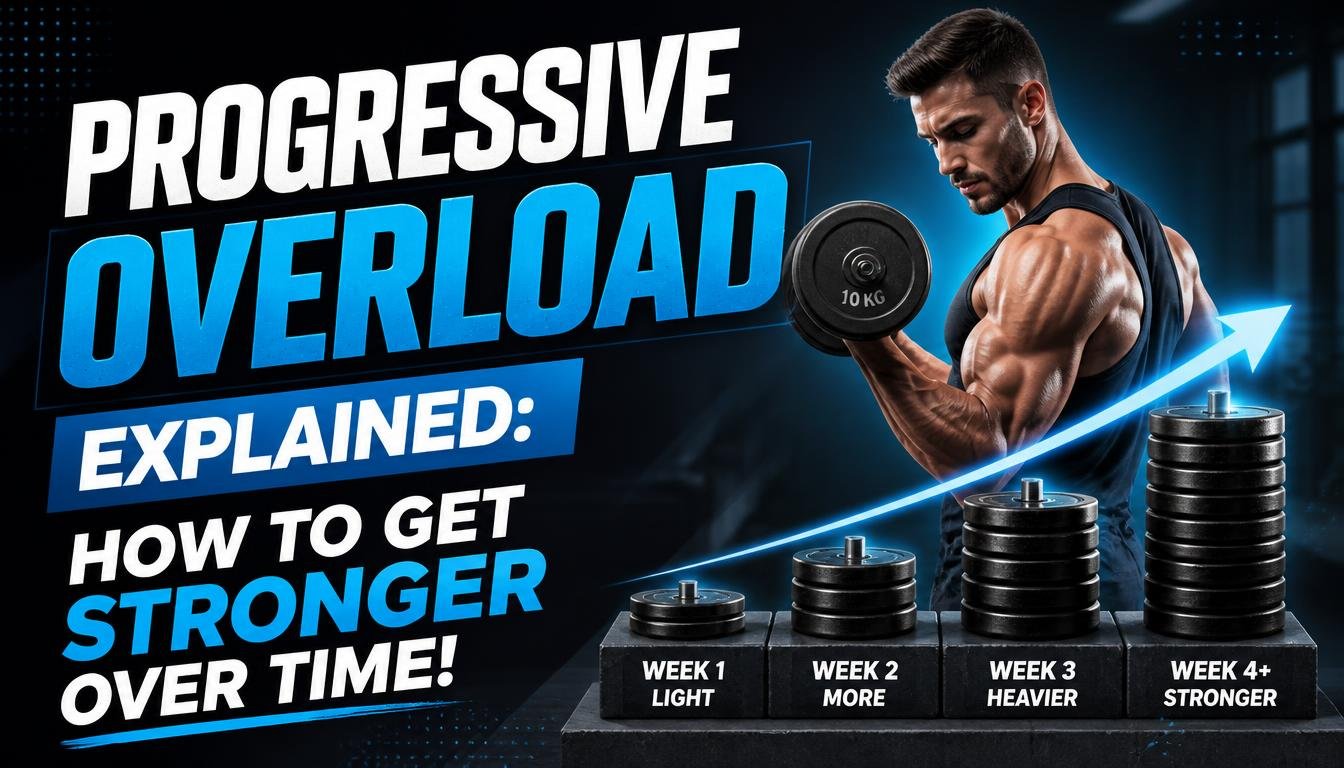
For each exercise, work within the repetition range listed in Part 1. When you can complete the highest number of repetitions in every set with steady technique, consider increasing the weight slightly.
For example:
- Week 1: 2 sets of 8 goblet squats
- Week 2: 2 sets of 9 goblet squats
- Week 3: 2 sets of 10 goblet squats
- Later: Increase the weight a little and return to the lower end of the range
This is an example, not a required timeline. Progress at a pace that allows you to maintain control and recover between workouts.
Change one thing at a time
You can make a workout more challenging by:
- Adding a repetition or two
- Adding a set
- Increasing the dumbbell weight slightly
- Using a slower, controlled lowering phase
- Improving your comfortable range of motion
Avoid increasing weight, sets, and workout frequency all at once. Making one adjustment at a time helps you understand how your body responds.
A Simple 4-Week Beginner Schedule
Use the full body routine from Part 1 for two non-consecutive days each week. This sample plan shows one way to build gradually.
| Week | Workout approach |
|---|---|
| Week 1 | Perform 1 set of each exercise; practice technique |
| Week 2 | If recovery is comfortable, perform 2 sets of each exercise |
| Week 3 | Keep 2 sets; add repetitions where you can maintain form |
| Week 4 | Continue, or increase the weight slightly on exercises that feel consistently manageable |
If a week feels too difficult, repeat the previous week or reduce the number of sets. You do not need to progress every week.
What If You Have Only One Pair of Dumbbells?
You can still train your whole body. Use the same pair for several exercises, but adjust the repetitions or variation if the weight feels too heavy or too light for a particular movement.
If the dumbbells are too heavy for shoulder presses, for example, do not force the exercise. Try a lighter option if available, or omit that movement until you have a suitable load.
If the dumbbells are too light for squats, you can slow the lowering phase or add repetitions while maintaining good technique. Eventually, you may need heavier weights or a different program to keep increasing the challenge.
What If You Have No Bench?
A bench is not required for this beginner plan.
- One-arm row: Use a stable support that will not slide or tip. If you do not have a suitable support, try a two-dumbbell bent-over row with very light weights, provided you can maintain a comfortable hip hinge.
- Chest press: Use the dumbbell floor press.
- Shoulder press: Perform it seated on a sturdy chair or standing, whichever feels more stable.
Do not use unstable furniture as workout equipment. Your setup should feel secure before you begin.
Common Beginner Dumbbell Workout Mistakes
Choosing weights that are too heavy
Heavy weights can make it harder to learn a movement. If you need to swing the dumbbells, arch your back, or rush through repetitions, reduce the load.
Using momentum instead of control
Try to lift and lower the weights smoothly. Avoid bouncing, jerking, or using your whole body to complete a curl or row.
Skipping lower-body exercises
It is easy to focus on curls and shoulder presses because they are familiar. A balanced whole-body routine also includes leg and hip movements such as squats and Romanian deadlifts.
Holding your breath
Breathe naturally throughout each set. Many people find it helpful to exhale during the effort and inhale as they return to the starting position. Avoid prolonged breath-holding.
Training hard every day
More sessions are not always better, especially when you are new to resistance training. Start with two sessions per week and adjust only if you are recovering comfortably.
Ignoring pain
Muscle effort can be normal during exercise, but sharp, worsening, or unusual pain is a reason to stop. Do not push through pain to finish a set. Seek qualified guidance if pain persists or you are unsure how to modify an exercise.
How to Track Your Progress
A simple workout log can help you notice improvements without guessing. After each session, record:
- The exercise variation
- The dumbbell weight used
- The number of sets and repetitions
- Whether the movement felt controlled
- Any discomfort or recovery concerns
For example:
| Exercise | Weight | Sets × reps | Notes |
|---|---|---|---|
| Goblet squat | 5 kg | 2 × 10 | Comfortable, controlled |
| Floor press | 3 kg each | 2 × 8 | Keep practicing |
| One-arm row | 5 kg | 2 × 10 each side | Stable position |
These numbers are illustrative only. Choose weights that suit your own ability.
Review your log every few weeks. If the same exercise feels easier and your technique remains steady, you may be ready for a small progression. If it feels harder than usual, consider more rest or a lighter session.
Nutrition and Recovery Basics
Your workout is only one part of a fitness routine. Adequate food, sleep, and recovery can support your ability to train consistently.
Eat regular, balanced meals
Include a variety of foods such as vegetables, fruit, grains, protein-rich foods, and sources of healthy fats. Protein-containing foods can include beans, lentils, dairy, eggs, tofu, fish, chicken, or other options that fit your preferences.
You do not need to follow a complicated diet to begin strength training. If you have specific nutrition needs or a medical condition, consult a registered dietitian or qualified healthcare professional.
Prioritize sleep and recovery
Give yourself time to rest between challenging sessions. If you feel unusually fatigued, are sleeping poorly, or notice that your performance is declining, reduce the workload and reassess your schedule.
Keep expectations realistic
Strength and fitness improvements happen at different rates. Focus on repeatable habits—showing up, practicing technique, and gradually increasing the challenge—rather than expecting rapid or guaranteed changes.
Conclusion: Build the Habit Before You Chase Heavier Weights
A beginner dumbbell workout plan doesn’t need to be complicated. Start with a few well-chosen exercises that train your major muscle groups, use a weight you can control, and focus on learning consistent technique.
For your first few weeks, aim to finish each workout feeling challenged but not completely exhausted. As the movements become easier, gradually add repetitions or a little weight. Keep a simple record of your exercises, sets, reps, and dumbbell weights so you can see your progress.
Most importantly, choose a schedule you can repeat. Two or three full-body sessions per week is a practical starting point for many beginners. Pair your workouts with regular movement, enough recovery, and balanced meals. If you have an injury, a medical condition, or pain that persists or worsens, get guidance from a qualified healthcare or fitness professional before continuing.
Key Takeaways
- Train your whole body with a balanced mix of squat, hinge, push, pull, and core exercises.
- Begin with two or three workouts per week, leaving recovery time between sessions.
- Choose dumbbells that let you complete each repetition with controlled form.
- Progress gradually by adding reps, improving technique, or increasing weight.
- Track your workouts instead of guessing whether you’re improving.
- Stop an exercise if you feel sharp pain, dizziness, or unusual symptoms.
Frequently Asked Questions
1. How many days a week should a beginner do dumbbell workouts?
Two or three non-consecutive days per week is a reasonable starting point for many beginners. This gives you regular practice while leaving time to recover. Adjust the schedule to your fitness level and how you feel between sessions.
2. What dumbbell weight should a beginner start with?
There is no single ideal starting weight. Choose a weight that feels manageable while allowing you to perform the planned repetitions with steady control and good technique. If you cannot maintain form, use lighter dumbbells or an easier variation.
3. Can I build muscle with only dumbbells?
Yes. Dumbbells can provide resistance for many major muscle groups, including your legs, back, chest, shoulders, and arms. Muscle-building results depend on consistent training, appropriate challenge, recovery, and nutrition—not on using a particular type of equipment.
4. Should beginners do full-body workouts or split routines?
Full-body workouts are often convenient for beginners because they train the major muscle groups in each session and require fewer weekly training days. A split routine can also work, but it may be easier to start with a simple full-body plan and adjust as your experience grows.
5. How long should a beginner dumbbell workout take?
Many beginner sessions take about 30–45 minutes, depending on the number of exercises, sets, rest periods, and how much time you need to learn each movement. Prioritize controlled repetitions over rushing to finish.
6. How many reps and sets should I do?
A practical starting point is 2–3 sets of 8–12 repetitions for many exercises. Some movements may suit a different range. Stop a set when your technique begins to break down, rather than forcing extra repetitions.
7. When should I increase my dumbbell weight?
Increase the weight when you can complete all planned sets and repetitions with consistent, controlled form and the current load no longer feels sufficiently challenging. Make small increases where possible. If the next dumbbell is too heavy, build repetitions or improve control first.
8. Can I do dumbbell workouts at home without a bench?
Yes. Many exercises can be done standing, seated on a sturdy chair, or lying on the floor. Floor presses, goblet squats, dumbbell rows with a stable support, and Romanian deadlifts are examples of movements that don’t require a workout bench.
9. Do I need to feel sore after a workout for it to be effective?
No. Muscle soreness is not a reliable measure of workout quality or progress. Focus on consistent training, gradually improving performance, and recovering well. Severe or unusual pain is a reason to stop and assess what happened.
10. Should I do cardio on days I use dumbbells?
You can. Walking, cycling, or other moderate activity can complement strength training. Keep the overall workload manageable, especially when you’re new to exercise, and allow yourself recovery when needed.
CTA
Ready to put your plan into action? Explore the workout and calorie tools on MyWorkoutAI.in to support your training routine and make your fitness goals easier to track.
Stop reading, start moving
Reading about training is the easy part. Fifteen minutes today beats a fortnight of research - and all of it is free.
Start Free